Asian subterranean termites in South Florida

Coptotermes gestroi

Pest Stats

Owl logo

Color

Workers are creamy white; soldiers have dark brown heads; winged alates are dark brown on top with a lighter yellow-brown underside.

Owl logo

Size

Alates are slightly smaller than Formosan termites, reaching 13 to 14 mm including wings.

Owl logo

Shape

Elongated, soft-bodied; soldiers have a distinctive teardrop-shaped head with a fontanelle (a pore on the forehead that secretes a white, sticky fluid).

Owl logo

Region

Southeast Florida: confirmed in Miami, Fort Lauderdale, Key West, Riviera Beach, and now spreading northward.

What are Asian subterranean termites?

Asian subterranean termites South Florida (Coptotermes gestroi) are an invasive species native to Southeast Asia. Over time, they have steadily expanded their range across the tropics and into South Florida over the past several decades. Notably, they were first detected in the continental United States in Miami in 1996. Since then, they have established colonies across southeast Florida and have spread as far north as Riviera Beach and, more recently, Tampa. In addition, they are closely related to the Formosan subterranean termite—another highly destructive invasive species—and are considered among the most damaging termite species in the world wherever they establish. Importantly, South Florida is currently the only place on Earth where both species coexist in the same territory. As a result, this situation has significant implications for homeowners. (See our page on Florida hybrid termites for more on what happens when these two species meet.)

How to identify Asian subterranean termites

Distinguishing Asian subterranean termites from Formosan termites, however, requires close inspection and, in most cases, a professional assessment. At first glance, both are invasive termite species from Asia and behave very similarly. As a result, they are difficult to tell apart without trained identification or magnification. In fact, accurate differentiation typically depends on subtle physical characteristics that are not easily visible to the untrained eye.

Owl logo

Soldiers

Have a large teardrop-shaped head with a fontanelle that releases a white, mucous-like secretion when the colony is threatened. Under magnification, Asian termite soldiers have one pair of hairs near the fontanelle rim, while Formosan soldiers have two pairs.

Owl logo

Alates (swarmers)

Dark brown on the top of the head and body with a lighter underside - a two-toned contrast that distinguishes them from the more uniformly orange-brown Formosan alate. Two light patches near the antennae (called antennal spots) are also visible on Asian termite alates.

Owl logo

Flight season

Runs roughly from February through April - ending approximately when the Formosan termite swarm season begins. Flights occur at dusk or at night, often toward porch lights, indoor lighting, and screens.


If you are seeing winged termites around lights in late winter or early spring, or finding piles of shed wings near windows and doors, do not assume they are harmless. Have a professional identify the species.

Why South Florida is especially vulnerable to Asian subterranean termites

Climate: South Florida’s year-round heat and humidity allows Asian subterranean termites to remain active every month of the year, with no winter slowdown. Port and marina traffic: Fort Lauderdale is one of the world’s busiest boating hubs, and shipboard infestations are a documented pathway for how this species spreads. Multiple vessels docked in South Florida have been found with active Asian termite infestations traced to boats arriving from the Caribbean. Species overlap: South Florida is the only place on Earth where Asian and Formosan subterranean termites share the same territory, which has led to confirmed hybrid termite colonies now established in the region. Expanding range: First detected in Miami in 1996, Asian subterranean termites reached Palm Beach County by 2005 and Tampa by 2023. The range is still expanding.

Workers among brood
Image by Teechippy, via Wikimedia Commons, licensed under CC BY-SA 4.0.

Primary Reproductive with workers
Image by Teechippy, via Wikimedia Commons, licensed under CC BY-SA 4.0.

Where do Asian subterranean termites live?

Like Formosan termites, Asian subterranean termites are soil-dwelling. They build foraging tubes and travel through the ground to reach the wood of your home. In South Florida, they have been found infesting:

Because this species requires a tropical climate, it has historically been restricted to South Florida. However, confirmed infestations in Tampa suggest that its range is now expanding. As a result, the potential risk is no longer limited to its original range. Therefore, South Florida homeowners, particularly in Palm Beach, Broward, Miami-Dade, and along the Treasure Coast, should consider this species an active and growing concern.

What do Asian subterranean termites eat?

Asian subterranean termites consume cellulose found in wood and plant materials. Their targets include:

Advanced infestations leave behind hollowed wood and, in severe cases, a papery material called carton — nest material packed into hollowed-out wood or structural voids.

Orange neotenic reproductive at top right
Image by Teechippy, via Wikimedia Commons, licensed under CC BY-SA 4.0.

Are Asian subterranean termites dangerous?

Asian subterranean termites are considered one of the most destructive termite species in the world. Damage from a mature colony can become severe in a relatively short time, particularly when a large, established colony invades a structure. Key concerns include:

Signs of an Asian subterranean termite infestation

Management of Asian subterranean termites

According to UF/IFAS, the same treatment strategies used for Formosan subterranean termites are appropriate for Asian subterranean termites. This includes:

If you are seeing signs of subterranean termite activity – or if you are in an area where Asian subterranean termites have been confirmed – a professional inspection is the right first step.

5 ways to prevent Asian subterranean termites in your home

Eliminate soil-to-wood contact

Raise wooden decks, posts, and frames so they do not touch the soil directly.

Manage moisture

Fix leaking pipes, clear gutters, and ensure water drains away from your foundation.

Reduce wood debris near the structure

Remove tree stumps, fallen branches, and scrap lumber from around your home.

Limit mulch against the foundation

Organic mulch retains moisture and attracts subterranean termites. Keep it several inches away from the base of your home.

Schedule annual inspections

Early detection is the most effective way to prevent costly damage. Annual inspections allow our technicians to catch activity before it becomes a structural problem.

Need termite control in South Florida?

If you suspect Asian subterranean termite activity - or any termite activity - Wise House Pest Control provides professional inspections, targeted treatments, and long-term monitoring to keep your home protected.

5 ways to prevent Asian subterranean termites in your home

Remove dead wood and stumps

These are preferred nesting sites for subterranean termites.

Keep gutters and downspouts clear

Moisture buildup near the foundation creates ideal conditions for colony establishment.

Inspect wooden fences and outdoor structures

Check regularly for mud tubes, soft wood, and foraging activity.

Monitor ornamental trees

Asian subterranean termites are known to nest in trees near structures before moving into the home.

Install bait stations around the perimeter

Ongoing monitoring is the most reliable way to intercept termite pressure before it reaches your structure.

Our Customers Love Us!

See What They Are Saying

Wise House reviews - 5-star pest control testimonial
“Wise House came highly recommended and they lived up to the accolades. Customer service, professionalisms, punctuality and the use of environmentally friendly products are on point. Dennis and Robert did an amazing job.”


- Michael C.
"Robert the technician that comes out has been great. Since we have a dog and two cats, we like that the products are pet safe. Very pleased!”

- John U
“Dennis was very professional and knowledgeable! I am very happy with Wise House and will now only use them for my pest protection! Five stars all around for Wise House Environmental Services.”

- Benjamin N.
“Robert is an extremely professional and knowledgeable technician. Did a great job inside with the active pests and awesome prevention as well as the outside. Highly recommend this company and especially Robert as the technician!”

- Bob G.
“He surveyed the entire property and used products that I felt would be safe and effective at getting rid of ants and other insects. I would definitely recommend Wise House, especially if you want effective pest control without all the toxins associated wit”

- Aaron C.
Bug-Logo

Dedicated To Being The Pest Control Company You Can Rely On

Request a professional estimate!
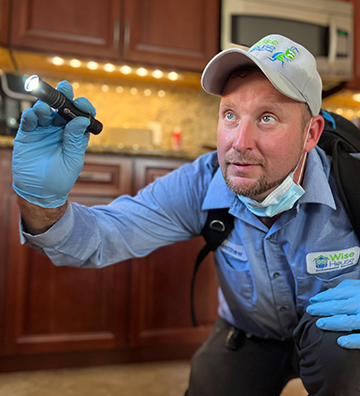
“The best technician I have had in years, professional, on time, friendly, very thorough and knowledgeable. I recommend him and the company to the future clients.”
Bozena S.
Flashlight Inspection Pic
ant control services technician treating home
Bug-Logo

Dedicated To Being the Pest Control Company You Can Rely On

Request a professional estimate!
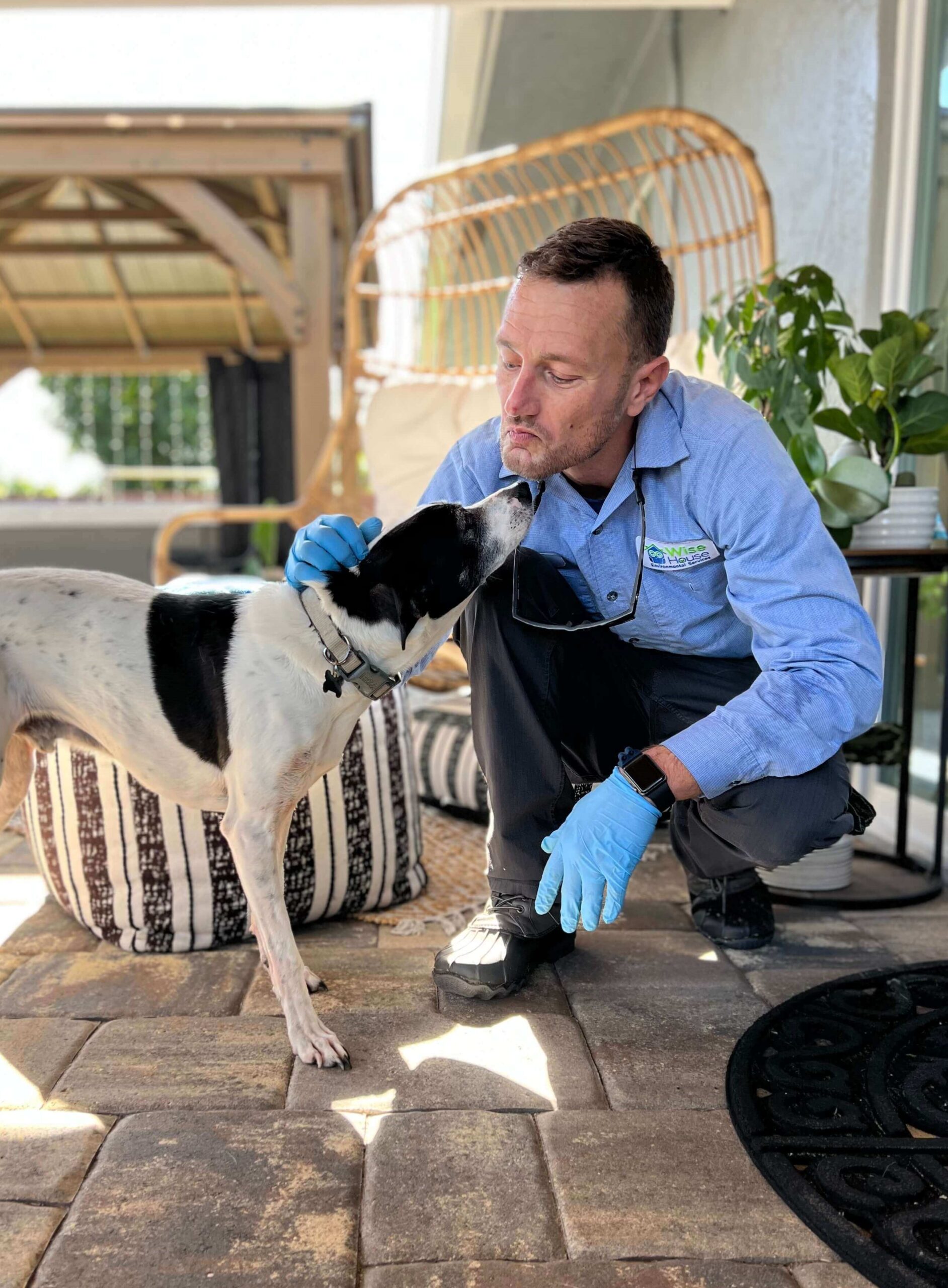
ant control services technician treating home

Have Questions? We've Got Answers

Termite Control FAQ

No — they are closely related but distinct species with different climate tolerances. South Florida is the only place in the world where both share the same territory.
They swarm from roughly February through April, at dusk or at night, and are strongly attracted to light sources. If you are finding winged termites or shed wings near windows and doors during this period, schedule an inspection.
You cannot reliably identify the species by visual inspection alone — differences between Asian and Formosan termites are subtle and sometimes require genetic analysis. A professional inspection is the right first step.
Yes. They form much larger colonies than native Eastern subterranean termites and can cause serious structural damage faster than most homeowners expect.
Moisture is the primary attractant — leaky pipes, clogged gutters, soil-to-wood contact, and mulch against the foundation all create ideal conditions. South Florida’s year-round heat and humidity allow colonies to remain active continuously.
UF/IFAS recommends the same approach used for Formosan termites — bait stations around the perimeter and liquid trench treatments around the foundation. Combining both methods provides the most comprehensive protection.