Termite bait stations in South Florida

Subterranean termites cause more structural damage in the United States than any other termite species - and South Florida's soil conditions make homes here especially vulnerable. Termite bait stations intercept subterranean termites before they reach your structure, eliminate the colony from the inside out, and provide continuous protection through regular monitoring visits.

What are termite bait stations?

Termite bait stations are in-ground monitoring and baiting devices installed around the perimeter of your home. Subterranean termites forage continuously through the soil searching for food. When they encounter a bait station, they feed on the bait and carry it back to the colony, where it is shared with other termites. Over time, the active ingredient spreads through the colony and can eliminate it, including the queen. Modern liquid termiticides can also transfer between termites and are highly effective, but they are typically applied once and may gradually degrade over time due to sunlight exposure, soil conditions, and microbial activity. Bait stations remain installed and are regularly monitored, serviced, and replenished, providing ongoing monitoring and renewable protection against future termite activity.

Request a Professional Termite Inspection & Quote

What termite species do bait stations target in South Florida?

Bait stations target common Florida subterranean species such as: the most common subterranean species in Florida. They build mud tubes along foundations, walls, and other surfaces to travel between the soil and the wood they are feeding on.

Owl logo

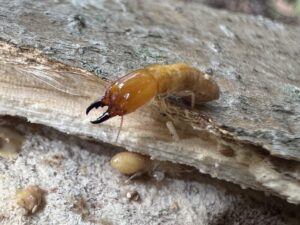
Eastern subterranean termites

are the most common subterranean species in Florida. They build mud tubes along foundations, walls, and other surfaces to travel between the soil and the wood they are feeding on.

Owl logo

Formosan subterranean termites

are an invasive species common on the Treasure Coast and throughout South Florida. They are significantly more aggressive than native subterranean termites, form much larger colonies, and can cause serious structural damage in a shorter period of time.

Owl logo

Asian subterranean termites

are also found in South Florida and share similar behavior to Formosan termites in terms of colony size and aggression.

Bait stations are not designed for drywood termites, which live inside the wood rather than in the soil. All these termites build mud tubes between soil and wood. If our inspection identifies drywood termite activity, we will discuss no-tent treatment or fumigation as the appropriate solution for that species.

Signs you may have subterranean termites

If you are seeing any of these signs, do not wait. Subterranean termite colonies can number in the millions and cause significant structural damage before it becomes visible.

How the installation and monitoring process works

Owl logo

Step 1: Inspection

We begin with a thorough inspection to confirm subterranean termite activity, identify the species, locate active mud tubes or entry points, and assess the extent of any existing damage. We will also check for conditions conducive to subterranean termite activity — such as soil-to-wood contact, moisture accumulation, or mulch buildup against the foundation.

Owl logo

Step 2: Station installation

Bait stations are installed in the soil around your home's perimeter at regular intervals, typically every eight to ten feet. Stations are flush with the ground and unobtrusive. Installation is completed in a single visit with no need to vacate your home and no disruption to your landscaping or daily routine.

Owl logo

Step 3: Monitoring visits

After installation, we return on a regular schedule to inspect each station for termite activity. When activity is detected, bait is introduced into the station. Termites feed on the bait and carry it back to the colony.

Owl logo

Step 4: Colony elimination

The bait material works by disrupting colony growth and reproduction. Worker termites transfer it throughout the colony, eventually reaching and eliminating the queen. Colony elimination can take weeks to months depending on colony size and activity level - this is a gradual, biological process, not an instant kill.

Owl logo

Step 5: Ongoing protection

After colony elimination, stations remain in the ground and continue to be monitored. This ongoing monitoring is what makes bait stations one of the most effective long-term termite protection strategies available - new termite pressure from the surrounding soil is intercepted before it ever reaches your structure.


How much do termite bait stations cost in South Florida?

Bait station pricing is based on the linear footage of your home's perimeter, which determines how many stations are needed. In most cases, subterranean termite bait station systems range from approximately $900 to $2,500 for installation, with ongoing monitoring billed separately to ensure the stations remain active and effective over time. For comparison, tent fumigation for drywood termites typically ranges from about $1,500 to $4,500+, while no-tent termite treatments generally range from about $750 to $2,500, depending on the size of the home and the areas requiring treatment. The most accurate way to get a number is with a free inspection, where we measure your perimeter, assess termite pressure around your property, and provide a clear quote before any work begins.

What is included

Every bait station program from Wise House includes regular monitoring visits. Warranty details, service intervals, and renewal options will be clearly explained before installation begins. We do not believe in surprises after the fact.

Bait stations vs. liquid trench treatment

Both methods target subterranean termites in the soil. Here is how they differ:

Bait Stations Liquid Trench Treatment
How it works Eliminates the colony from within Creates a chemical barrier in the soil
Best for Ongoing monitoring and colony elimination Immediate barrier protection
Disruption Minimal — in-ground, unobtrusive Trenching around foundation required
Ongoing service Regular monitoring visits included Reapplication needed over time
Targets Subterranean termites Subterranean termites
Combined use Often used together for maximum protection Often used together for maximum protection

In many situations we recommend combining both methods – bait stations for colony-level elimination and monitoring, and a liquid trench treatment to establish an immediate protective barrier around the foundation.

Why Choose Wise House Pest Control?

When you choose us, you’re choosing a team that genuinely cares about your peace of mind and the well-being of your home. Call us today at 561-727-8239 to experience the difference of working with a family-owned pest control company in South Florida.

Family-Owned and Operated

Treating every customer like family. As a locally run business, we value honest service, clear communication, and doing the job right the first time

Eco-Friendly & Pet-Safe Solutions

Our technicians apply all pest control treatments with your family’s and pets’ safety as a top priority. Our eco-friendly options also help protect your home and the environment

Personalized
Service:

Every service is tailored to meet your specific pest control needs. We take the time to understand your situation and customize a solution that works best for your home

Attention
to Detail:

Our family oversees every aspect of the business to ensure top-quality results. From the first call to the final treatment, we stay involved to make sure every customer gets the care and attention they deserve.

Highly Rated
on Google

We’re proud of our 5-star reputation. Hundreds of happy South Florida homeowners trust us to deliver consistent, quality pest control with lasting results.

Community
Commitment:

Because our team lives here too, we care deeply about the neighborhoods we serve. This community is our home, and we’re committed to keeping it safe, healthy, and pest-free for families just like ours.

Serving South Florida homeowners

We install and monitor termite bait stations throughout South Florida including Palm Beach County, Martin County, and Port St. Lucie County - including West Palm Beach, Boca Raton, Boynton Beach, Delray Beach, Lake Worth, Jupiter, Wellington, Palm Beach Gardens, Port St. Lucie, and Stuart.

Our Customers Love Us!

See What They Are Saying

Wise House reviews - 5-star pest control testimonial
“Wise House came highly recommended and they lived up to the accolades. Customer service, professionalisms, punctuality and the use of environmentally friendly products are on point. Dennis and Robert did an amazing job.”


- Michael C.
"Robert the technician that comes out has been great. Since we have a dog and two cats, we like that the products are pet safe. Very pleased!”

- John U
“Dennis was very professional and knowledgeable! I am very happy with Wise House and will now only use them for my pest protection! Five stars all around for Wise House Environmental Services.”

- Benjamin N.
“Robert is an extremely professional and knowledgeable technician. Did a great job inside with the active pests and awesome prevention as well as the outside. Highly recommend this company and especially Robert as the technician!”

- Bob G.
“He surveyed the entire property and used products that I felt would be safe and effective at getting rid of ants and other insects. I would definitely recommend Wise House, especially if you want effective pest control without all the toxins associated wit”

- Aaron C.
Bug-Logo

Dedicated To Being the Pest Control Company You Can Rely On

Request a professional estimate!
ant control services technician treating home

Have Questions? We've Got Answers

Termite Control Services FAQ

Bait stations are not an instant solution — they work with termite biology to eliminate the colony gradually. Depending on colony size and activity level, full colony elimination can take anywhere from a few weeks to several months. The benefit is that they eliminate the source of the problem rather than just blocking entry points.
No. Bait stations are designed for subterranean termites that forage through the soil. Drywood termites live inside wood and do not come into contact with in-ground stations. If our inspection identifies drywood termite activity, we will recommend no-tent treatment or tent fumigation depending on the scope of the infestation.
Monitoring frequency depends on your service program. We will outline the schedule clearly before installation. In South Florida’s climate, regular monitoring is important because subterranean termite pressure is present year-round.
No. Stations are installed flush with the ground at the soil line and are unobtrusive. Installation does not require trenching or disruption to existing landscaping.
The station caps are visible at ground level but are low-profile and blend into the landscape. Many homeowners barely notice them after installation.
Fumigation eliminates drywood termites inside your structure but does not protect against subterranean termites coming up from the soil afterward. Bait stations are a common follow-up recommendation after fumigation to provide ongoing subterranean termite protection.

Is Your Home at Risk? Check the Termite Activity Near You

Search your address on the map below to see confirmed termite infestations in your neighborhood. If activity has been spotted nearby, your home could be next – don’t wait until it’s too late.