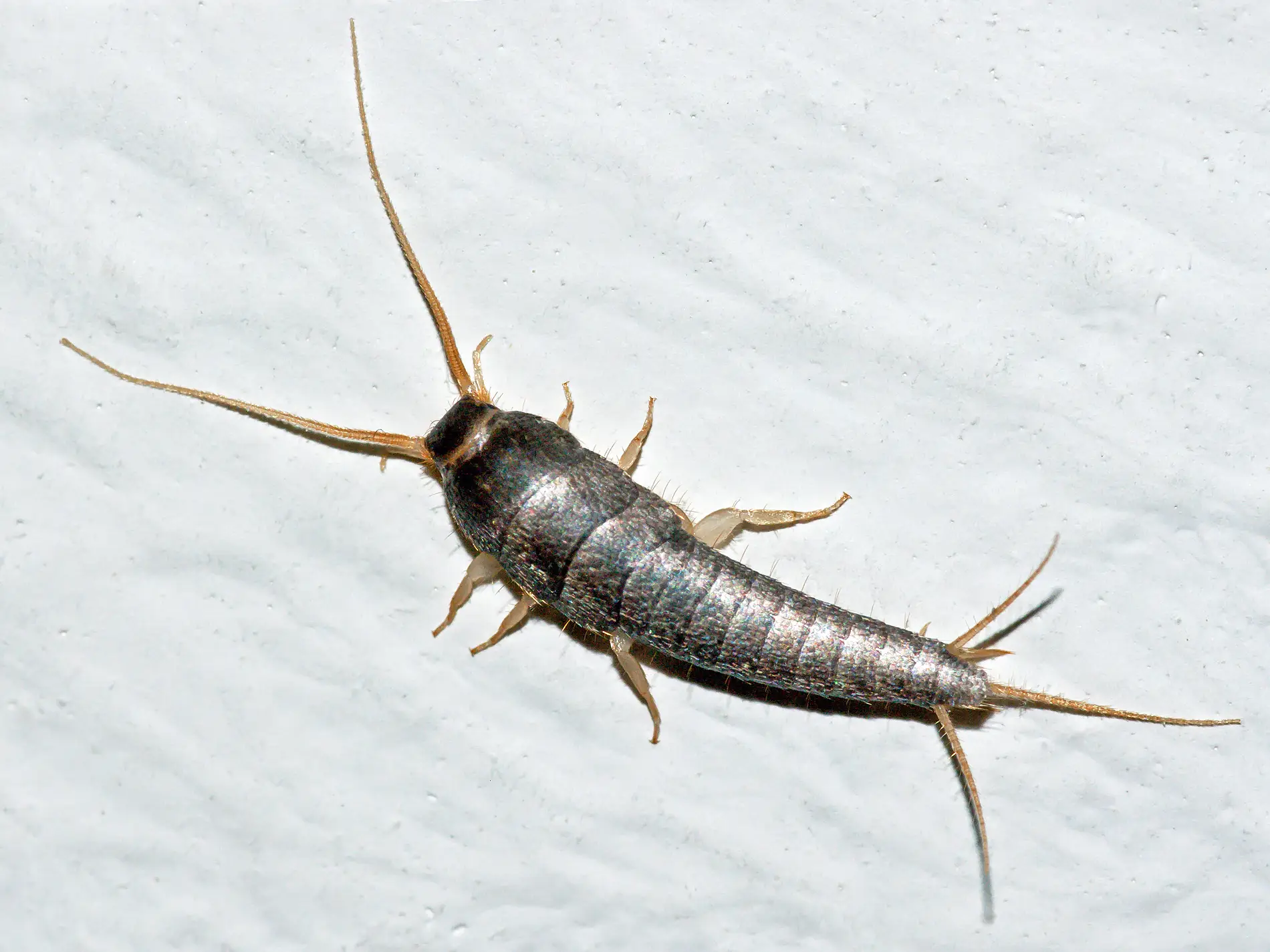
Silverfish are one of those pests that show up without warning and are surprisingly hard to shake. If you have spotted one darting across your bathroom floor or found small irregular holes in stored clothing or books, you likely have more hiding where you cannot see them. Here is what actually works in South Florida’s climate.
Why DIY methods fall short
Most over-the-counter sprays treat the surface, not the source. Silverfish nest deep inside wall voids, beneath attic insulation, and in tight crevices that a store-bought product will never reach. According to the University of Florida IFAS Extension, silverfish can survive for months without food, which means simply removing food sources is rarely enough to eliminate an established population.
Sticky traps and diatomaceous earth can reduce the number of silverfish you see, but neither addresses the colony nesting inside your walls. In South Florida’s humidity, populations recover quickly between treatments.
What actually works
Effective silverfish control combines two things: eliminating the moisture conditions driving the infestation and applying targeted residual treatment directly to harborage areas.
Start with moisture. Fix any slow leaks under sinks, run a dehumidifier in bathrooms and laundry rooms, and check that your attic has adequate ventilation. The Florida Department of Agriculture and Consumer Services identifies excess indoor moisture as the primary condition allowing silverfish to persist inside homes.
Then address entry points. Seal gaps around pipes, cracks along the foundation, and openings around window frames where silverfish travel in from mulch beds and soil outside.
If activity continues after those steps, a professional inspection is the most reliable next move. A trained technician will check attic insulation, wall voids, and exterior harborage zones that a homeowner inspection typically misses.
When to call a professional
If you are seeing silverfish regularly, finding damage to books, wallpaper, or clothing, or spotting shed skins and droppings in cabinet corners, the infestation is already established. At that point, DIY treatment is unlikely to produce lasting results.
Wise House Pest Control provides silverfish inspections and targeted treatment across Palm Beach County and the Treasure Coast, covering the harborage areas where silverfish actually live and reproduce.
Look for irregular holes or scraping marks on books, paper, and clothing, along with tiny pepper-like droppings and shed skins near baseboards or in cabinet corners. Silverfish are nocturnal, so spotting one during the day usually means the infestation is already significant.
Do silverfish go away on their own?
No. Silverfish reproduce continuously and can live up to eight years, so an untreated infestation will grow over time. Addressing both the moisture conditions and the harborage areas is the only reliable way to eliminate them.
Are silverfish dangerous?
Silverfish do not bite or spread disease, but their shed skins and droppings can trigger allergic reactions in sensitive individuals over time. They are primarily a property threat, causing ongoing damage to books, clothing, wallpaper, and stored items.
Why do I keep getting silverfish in my bathroom?
Bathrooms provide the combination of warmth, humidity, and dark hiding spots that silverfish need to survive. Fixing leaks, improving ventilation, and sealing gaps around pipes are the first steps to making the space less hospitable.