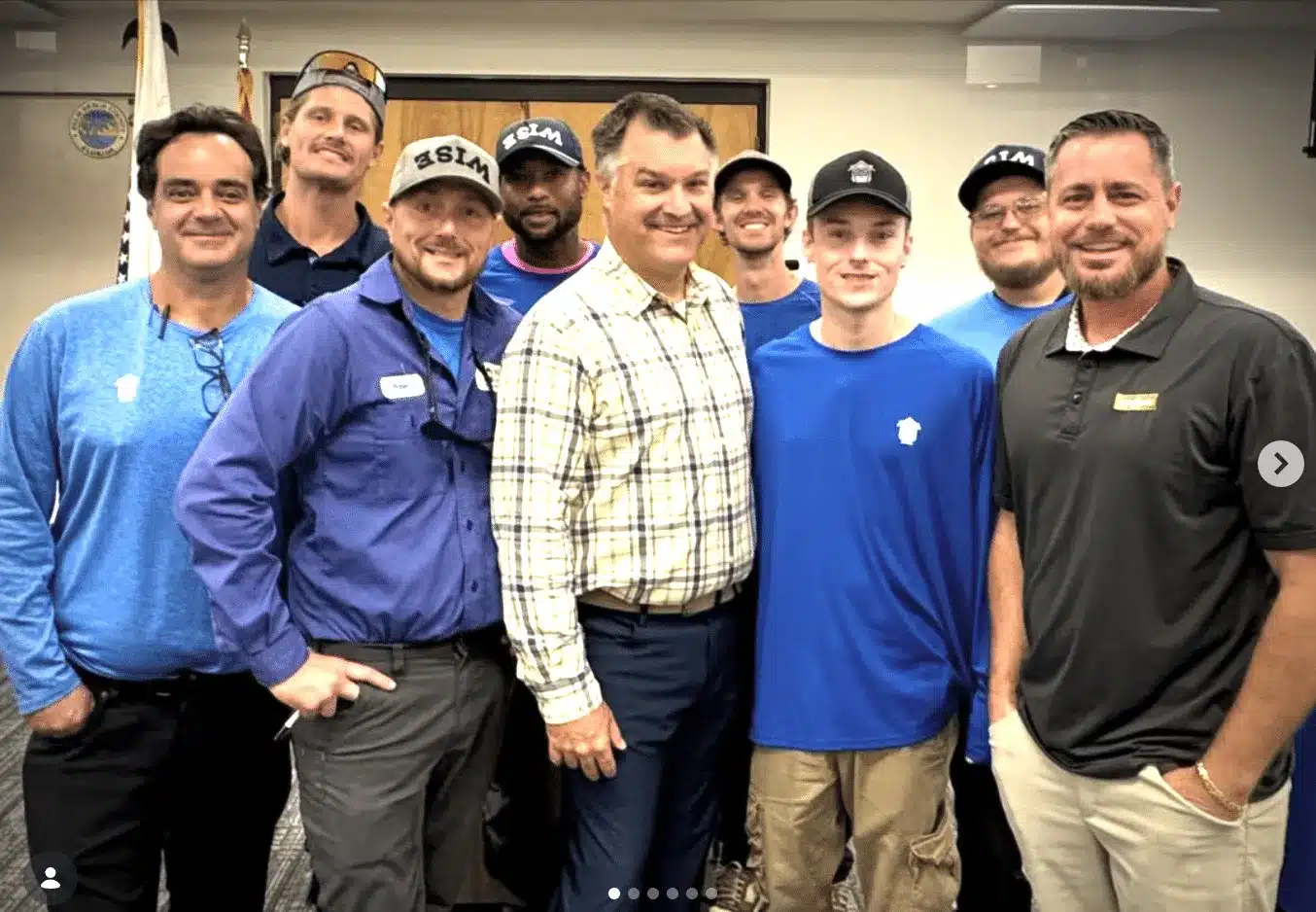
Wise House Pest Control technicians and staff with the visiting entomologist after a monthly training session

Blog Post

Why Wise House techs outperform the big-name exterminators — what the big chains skip every month

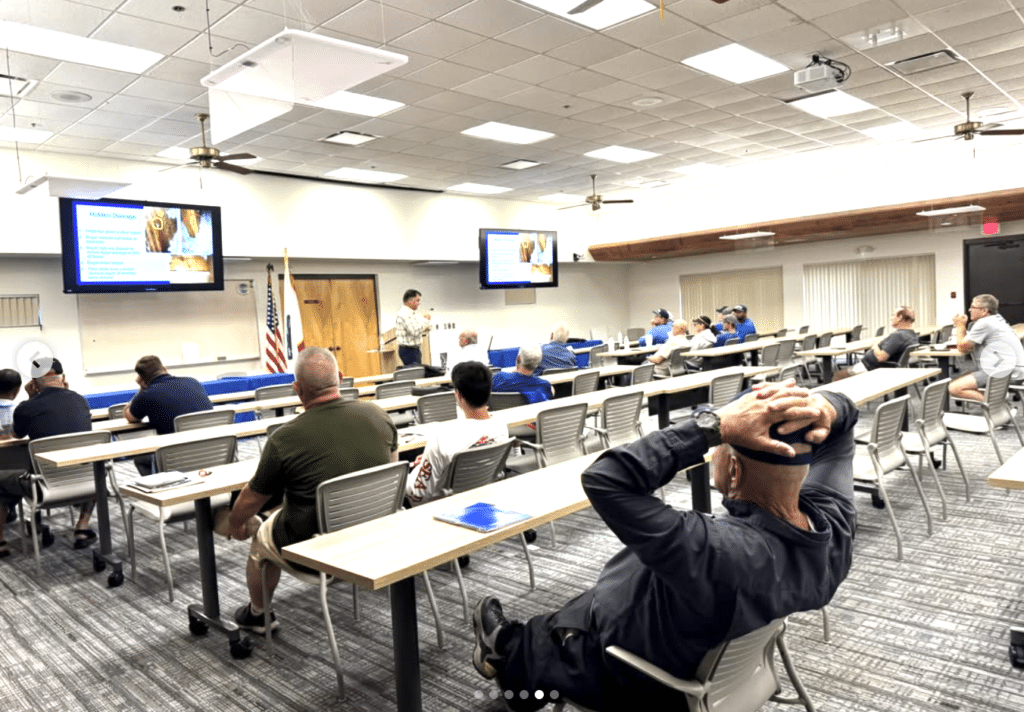
Technicians seated in a classroom watching a slide presentation titled Hidden Damage during an entomologist training session

Most homeowners never see what happens before a technician shows up at their door. Part of that preparation is pest control technician training, held once a month in a classroom, not a truck.

Every tech on our team sets aside a morning to sit through a lecture from Joe, our staff entomologist, covering pest biology and behavior in more depth than a typical field briefing allows. It is not a perk. It is a standing requirement.

The core of it

Pest control is a field where the research keeps changing. New findings on rodent behavior, termite damage patterns, and treatment resistance come out regularly, and a technician who only learns on the job tends to repeat the same assumptions year after year.

Monthly training with a working entomologist is how we keep that from happening on our team, and it is the kind of standing investment many pest control companies do not make.

Field experience alone isn't enough

Years on the job teach a technician what usually works. They do not automatically teach why it works, or what changed in the underlying biology that made an old assumption wrong. A tech who only has field experience can get stuck repeating a method past the point it stopped being effective.

Joe's monthly sessions exist to close that gap before it costs a customer a callback.

What monthly pest control technician training adds

These are not generic refreshers. Each session is built around specific, current material, and it shows in what a tech notices on a property afterward.

Identifying damage most inspections miss.

A recent session walked through how to spot hidden structural damage from wood-destroying pests, the kind that is easy to miss during a routine inspection if a technician does not know exactly where and how to look.

Discussion, not a one-way lecture.

Technicians bring up specific properties they are actively working and ask how the material applies to the exact situation they are seeing in the field that week. The session adjusts around real cases, not a fixed script.

Judgment on properties that do not fit the textbook.

South Florida homes vary widely in construction, age, and landscaping. A technician who understands why a treatment works, not just how to apply it, makes better calls on the properties that are the exception rather than the rule.

Why this matters for the house you live in

A technician who can explain what is happening on your property, not just recite a treatment plan, is the direct result of this kind of ongoing education. It also means more precise, targeted treatment rather than a broader application used because it is familiar rather than because it is correct for your situation.

Next step

If you want a technician who can explain exactly what is happening on your property and why, call Wise House Pest Control to schedule an inspection. Our team trains year-round so the answer you get is current, not inherited.

We Have Two Convenient Locations:

Home icon

Lantana Office

1177 Hypoluxo Rd Suite C-31 Lantana, FL 33462

Home icon

Port St Lucie Office

464 NW Peacock Blvd, Unit 106 Port St Lucie, FL 34986

Have Questions? We've Got Answers

Frequently Asked Questions

Every Wise House technician sets aside a morning each month for a lecture from Joe Jonovich, our Board Certified Entomologist, covering pest biology and behavior in more depth than a typical field briefing allows. Attendance is a standing requirement for the whole team, not an optional perk.
Board Certified Entomologist (BCE) is a credential granted by the Entomological Society of America. Earning it takes a life-science degree with entomology coursework, years of professional experience, references, and passing exams. Holders keep it current with a Professional Maintenance and Certification report every three years that requires at least 120 continuing-education credits. Joe Jonovich holds this credential.
Florida requires certified operators to renew their certificates every year and to complete approved continuing education, covering legislation, safety, pesticide labeling, and integrated pest management, or pass an exam. That is a licensing baseline for operators. Wise House’s monthly sessions with an entomologist are our own standard, and they apply to every technician.
Termite damage is often hidden. UF/IFAS notes that subterranean termites feed along the wood grain and can leave only a thin veneer of undamaged wood, and that drywood termite galleries contain no mud while colonies can stay small for years. Knowing that behavior helps a technician decide where to probe and tap, such as baseboards, door frames, and thresholds, instead of relying on what is visible.
Different pests nest, travel, and feed in different ways, so the right treatment depends on correctly identifying the pest and where it is active in your home. Technicians who keep up with current research on rodent behavior, termite damage patterns, and treatment resistance can target the source of a problem instead of applying the same product everywhere.
Ask how often technicians train beyond licensing requirements, who leads the sessions and what credentials that person holds, whether attendance is required for every technician, and how the training changes what happens during an inspection. At Wise House the answers are monthly, Joe Jonovich, B.C.E., every technician, and inspections that look for hidden activity rather than only what is visible.