Southern Black Widow
Family Lycosidae
Pest Stats

Color
Shiny black with a red hourglass on the underside of the abdomen

Size
Female body about ½ inch long, 1½ to 2 inches with legs. Males are about half that size

Shape
Round, bulb-like abdomen with long, thin, glossy legs

Region
Throughout Florida, in sheds, garages, woodpiles, and other dark, quiet spots

What is a southern black widow?
The southern black widow is a venomous spider found across the southeastern United States, including Florida. It belongs to the cobweb spider family, Theridiidae. According to UF/IFAS, it is one of four widow spiders in Florida, along with the brown widow, the red widow, and the northern black widow. It is shy and hides most of the time, but its bite is a real medical concern.
What do southern black widows look like?
The adult female is the one most people picture. Look for these features:
- Shiny, jet-black body that looks almost like a black bead.
- Round, plump abdomen behind a much smaller front body section.
- Red hourglass on the belly. On the southern black widow, the top and bottom halves are joined in the middle.
- Long, thin legs that are also black and glossy.
Males look very different. According to UF/IFAS, they are much smaller, with a body only about ¼ inch long. They don't have the full hourglass but may have red spots on the abdomen. Spiderlings start out white and pick up adult colors as they grow.
Similar spiders
Quick ID tip: A glossy black body, a red hourglass joined in the middle, and a smooth, round egg sac point to the southern black widow. According to Michigan State University, the northern black widow's hourglass is usually split in the middle. The brown widow is tan to brown with an orange hourglass and spiky egg sacs.
Where do southern black widows live?
Southern black widows like dark, dry, sheltered places where they won't be disturbed. According to UF/IFAS, they live outdoors in wood piles, rock piles, rodent burrows, and hollow stumps. Around buildings, they move into garages and sheds. Around a South Florida home, check these spots:
- Stacked firewood, lumber, and pavers
- Garage and shed corners, shelves, and storage boxes
- Under patio furniture, grills, and outdoor equipment
- Water meter and irrigation boxes, plus unused flower pots
- Gaps under decks and along the base of the house
What do southern black widows eat?
Southern black widows eat insects that get stuck in their webs. According to UF/IFAS, their diet includes flies, crickets, grasshoppers, moths, and beetles. They also catch pest ants, like red imported fire ants.
Once prey gets tangled, the spider wraps it in silk and then bites it.
Are southern black widows dangerous?
Yes, their bite can make you sick, but bites are not common. Black widows are not aggressive and would rather hide than bite. According to UF/IFAS, most bites happen when people reach into places where the spider lives, like a woodpile.
- The venom affects the nervous system. According to Mayo Clinic, pain and swelling may spread to the belly, back, or chest.
- Other signs include strong belly cramps, nausea, vomiting, sweating, and shaking.
- The CDC notes that a bite may show two small puncture marks.
- Deaths are rare. UF/IFAS reports no deaths among more than 2,000 U.S. black widow bites reported in 2010.
- Young children, older adults, pregnant people, and people with health problems can have more serious reactions.
Management of southern black widows
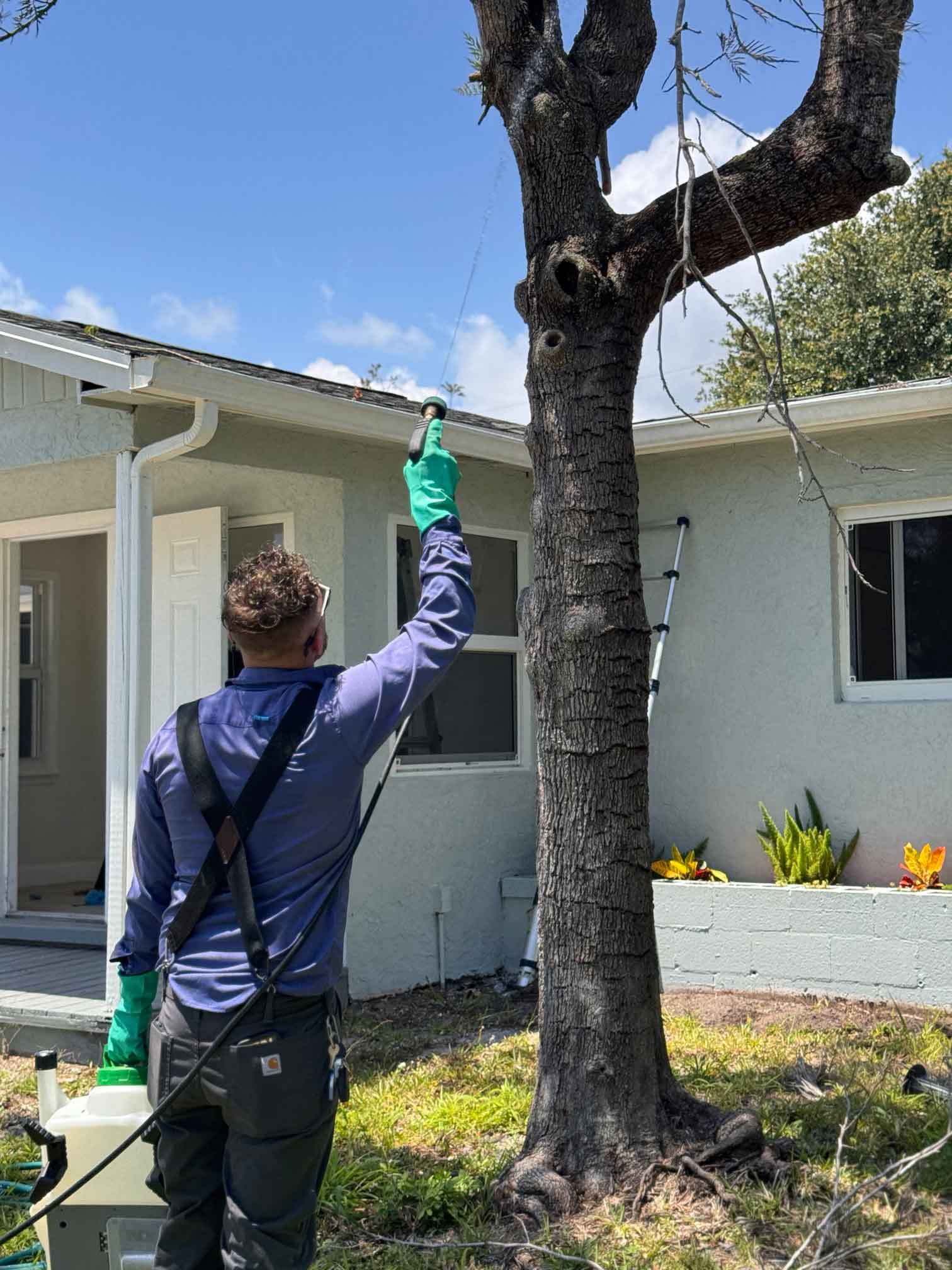
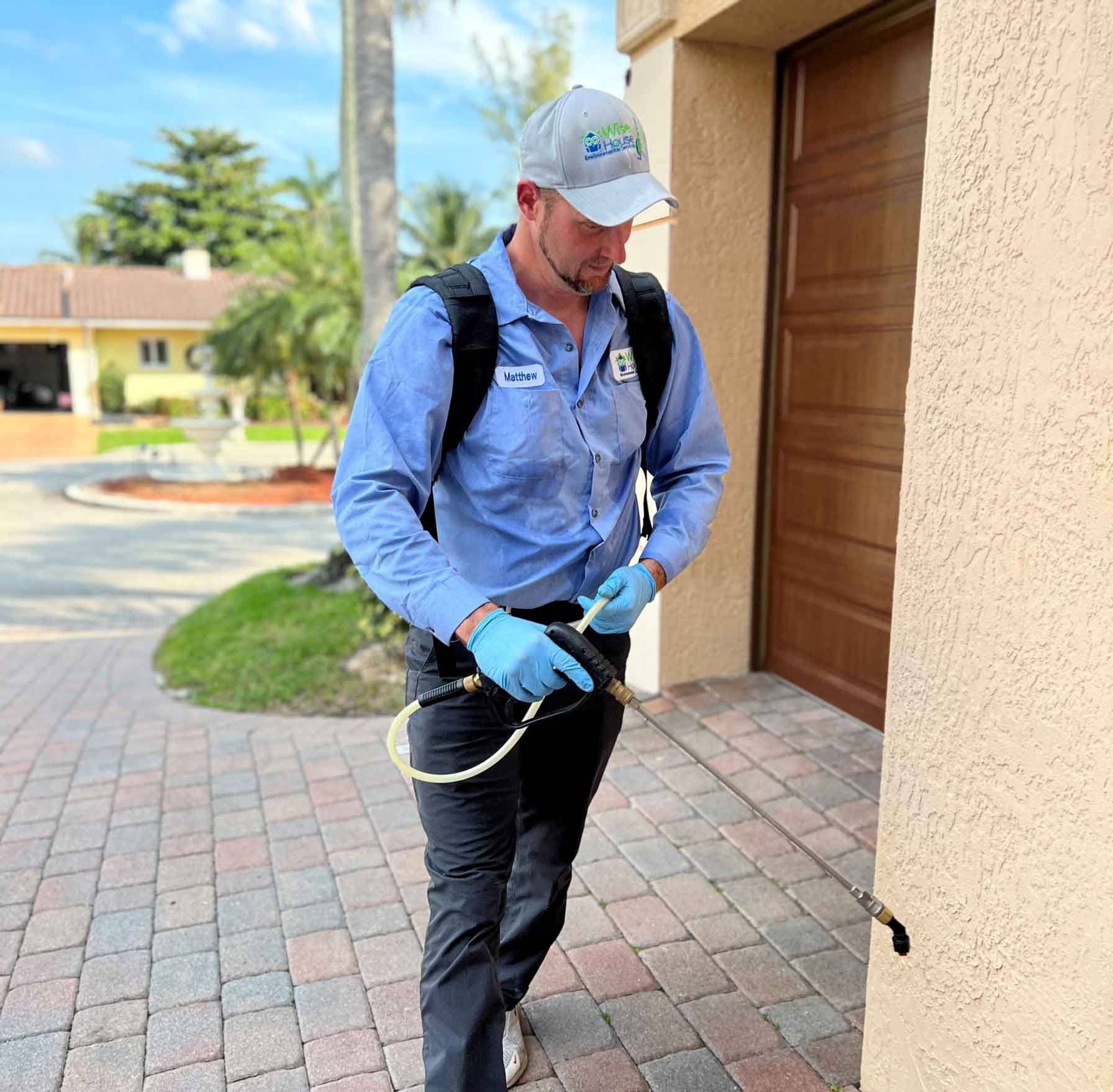
Spraying alone gives only short-term results. According to UC IPM, it works best when combined with good housekeeping. At Wise House Pest Control, we combine both:
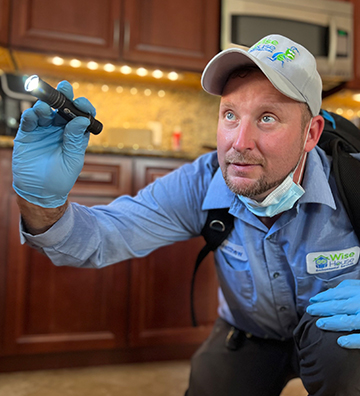
- Inspection of garages, sheds, woodpiles, and other spots where widows hide
- Removal of webs and egg sacs
- Targeted treatment that is safe for families and pets
- Sealing advice for cracks in the foundation and gaps around doors and windows
For homes in Boca Raton, Boynton Beach, and Port St. Lucie, our maintenance plans keep treatments on a regular schedule all year.
Need help getting rid of southern black widows?
Contact Wise House Pest Control at (561) 727-8239 in Palm Beach County or (772) 783-4300 on the Treasure Coast for more information and a free quote on spider control services.
6 ways to keep southern black widows out of your home
Most bites happen by accident, so a few simple habits go a long way.
Wear gloves outdoors
Put on thick gloves before moving wood, rocks, pots, or yard debris. Most bites happen when someone reaches into a hiding spot bare-handed.
Declutter the garage and shed
Widows love undisturbed piles of boxes and tools. Store items in sealed plastic bins and keep them off the floor.
Move woodpiles away from the house
Stack firewood and lumber off the ground and well away from your walls.
Seal cracks and gaps
Caulk gaps around windows, pipes, and utility lines, and install door sweeps.
Shake out shoes, gloves, and clothes
Check anything stored in the garage or shed before you put it on, especially items you haven’t used in a while.
Schedule regular pest control
Widows follow their food, so fewer bugs means fewer spiders. Our residential pest control treats the places where both hide.
Our Customers Love Us!
See What They Are Saying
- Michael C.
- John U
- Benjamin N.
- Bob G.
- Aaron C.

Dedicated To Being The Pest Control Company You Can Rely On
Request a professional estimate!
★★★★★ 5.0 from 622 Google reviews
"My house was over run by ants and thankfully Zach spent hours working in the heat to help us out. Such a nice guy, I am so appreciative."
Taylor, ant extermination
"If you ever have an issue they will show up either same day or by the following. I've had great pest control over the years since I've used this company, specifically the ants, and they have been almost 99% controlled."
Raina T., general inspection and ant extermination
"Took extra time to make sure all of the spider webs were cleared from the pool cage. A+ service."
Christopher L., general pest inspection
"Luke arrived on time. He did an inspection then provided treatment to areas of concern. Thank you again for protecting our property from pests."
Christine, general pest control
Have Questions? We've Got Answers
Spider Control Services FAQ