American House Spider
Family Theridiidae
Pest Stats

Color
Yellow to brown legs with darker rings, and a gray abdomen marked with black and white

Size
Females about 3/16 to 1/3 inch long; males smaller, around 1/8 inch

Shape
A round, high-domed abdomen with dark chevrons toward the rear and thin, banded legs

Region
Throughout Florida, in garage corners, eaves, window frames, and porch ceilings

What is an American house spider?
The American house spider is the spider behind most of the cobwebs in South Florida garages, porches, and window corners. According to UF/IFAS, this species is Parasteatoda tepidariorum, a cobweb spider in the family Theridiidae — the same family as widow spiders, though the house spider is not known to be dangerous. It is small, drab, and shy, and it spends its life waiting in a messy tangle of silk for an insect to blunder in.
What do American house spiders look like?
American house spiders are easy to overlook. UF/IFAS describes a yellow to brown carapace and legs banded with darker rings, and a gray abdomen patterned in black and white. The abdomen sits higher than it is long, almost round, with a white spot behind its highest point bordered in front by black, dark lines down the sides, and black chevrons toward the rear. Males are smaller and darker than females.
Females run about 3/16 to 1/3 inch in body length, males about 1/8 inch. You will often see pear-shaped, light brown egg sacs hanging loose in the web, and one female can produce several of them over a year.
Quick ID tip: Check the underside of the abdomen. Widow spiders in the same family show a red or orange hourglass or marking there, while an American house spider has two light patches around a darker area and no hourglass. House spider webs are also loose and tangled, not the strong, snapping silk of a widow web.
Where do American house spiders live?
American house spiders build tangle webs in the angle where two surfaces meet — an eave and a wall, a window frame and its sill, the corner of a garage ceiling. UF/IFAS notes that where conditions suit them, many spiders build nearly continuous webs across eaves, walls, and window frames. The spider usually waits in the center of its own web. They also turn up under bridges and inside culverts.
The species probably originated in South America and now lives nearly worldwide, carried around on plants. In South Florida it is active year round, and the webs it abandons are what collect dust and become the cobwebs you keep sweeping out of the same corner.
What do American house spiders eat?
American house spiders eat whatever flies, hops, or wanders into the web. UF/IFAS records a wide range of prey for this species, including German cockroaches and even scorpions. Around South Florida homes that usually means flies, mosquitoes, gnats, ants, and the small insects drawn to porch and garage lights at night.
That is also why they settle where they do. A corner with a steady supply of insects keeps a house spider fed, so webs cluster near lights, doors, and windows.
Are American house spiders dangerous?
American house spiders are not known to be dangerous. UF/IFAS describes them as shy and not aggressive, and bites are rare because the spider would rather drop out of the web than defend it. They sit in the same family as widow spiders, but they do not carry the same medical risk.
Two honest caveats. All spiders have venom, and reactions vary from person to person. UF/IFAS also records one case of a serious allergic reaction to a bite from this species, reported in Gainesville, Florida. If you are bitten and the reaction spreads or does not settle down, see a doctor.
Management of American house spiders
Knocking down a web does not solve much on its own. The spider rebuilds, or the next one moves into the same corner, because the corner is where the insects are.
At Wise House Pest Control, we work on what keeps the webs coming back:
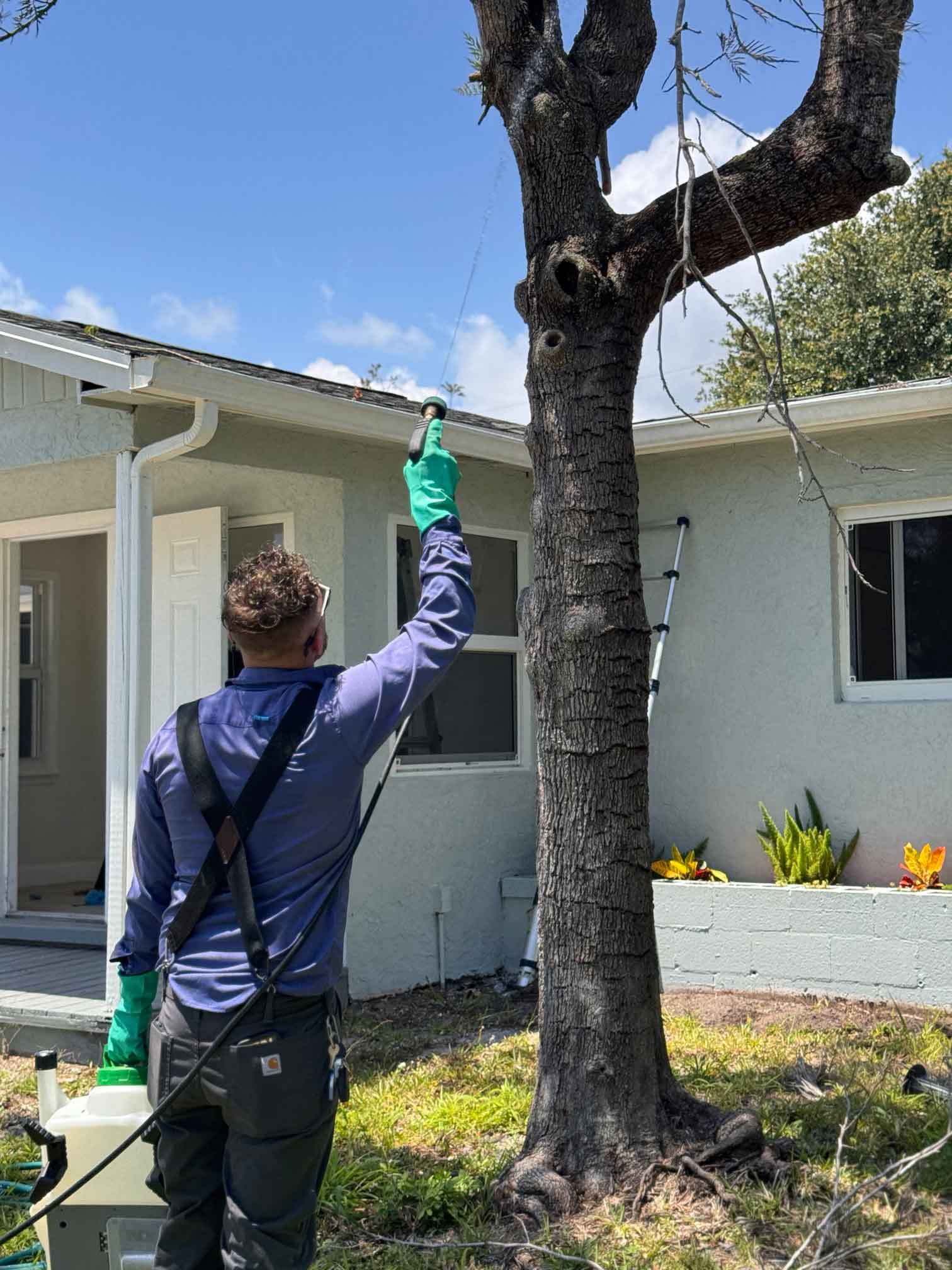
- Web removal around eaves, soffits, porch ceilings, and window frames
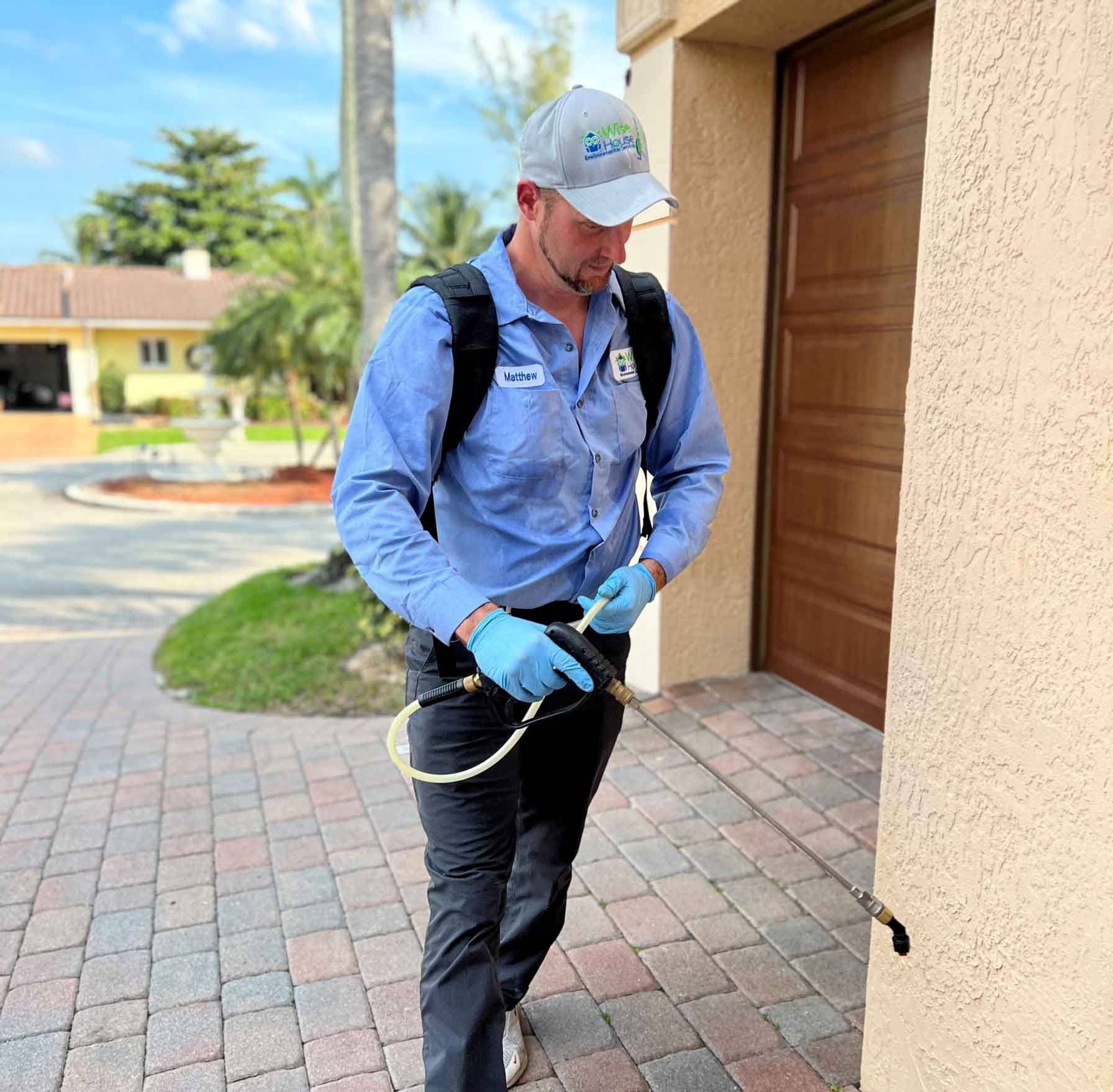
- Exterior perimeter treatment that is safe for families and pets
- Reducing the flies, gnats, and other insects that feed house spiders
- Lighting and screening advice that cuts the insect traffic at your doors
For homes in Boca Raton, Boynton Beach, and Port St. Lucie, our maintenance plans keep webs knocked back and the insects behind them under control all year.
Need Help Getting Rid of American House Spiders?
Contact Wise House Pest Control at (561) 727-8239 in Palm Beach County or (772) 783-4300 on the Treasure Coast for more information and a free quote on spider control services.
6 ways to keep American house spiders out of your home
House spiders settle where the insects are, so the goal is to make your walls a poor place to hunt. If the webs keep coming back in the same spots, a professional can work out why.
Sweep the webs down on a schedule
A web knocked down once comes back. Brush eaves, soffits, porch ceilings, and window corners every few weeks so the spiders keep moving on.
Change your outdoor lighting
Porch and garage lights pull in the insects house spiders eat. Yellow bug bulbs or motion sensor lights cut that traffic down.
Seal gaps around windows and doors
Caulk around window frames and add door sweeps. The same gaps that let spiders in also let in the insects they are waiting for.
Repair torn screens
Damaged window and lanai screens give both spiders and their prey a way in, and a sheltered place to build.
Declutter the garage and storage areas
Use sealed plastic bins instead of cardboard, and keep boxes off the floor and away from the walls where webs go up.
Schedule routine pest control
Regular residential pest control keeps webs cleared and holds down the insects that draw house spiders in.
Our Customers Love Us!
See What They Are Saying
- Michael C.
- John U
- Benjamin N.
- Bob G.
- Aaron C.

Dedicated To Being The Pest Control Company You Can Rely On
Request a professional estimate!
★★★★★ 5.0 from 622 Google reviews
"My house was over run by ants and thankfully Zach spent hours working in the heat to help us out. Such a nice guy, I am so appreciative."
Taylor, ant extermination
"If you ever have an issue they will show up either same day or by the following. I've had great pest control over the years since I've used this company, specifically the ants, and they have been almost 99% controlled."
Raina T., general inspection and ant extermination
"Took extra time to make sure all of the spider webs were cleared from the pool cage. A+ service."
Christopher L., general pest inspection
"Luke arrived on time. He did an inspection then provided treatment to areas of concern. Thank you again for protecting our property from pests."
Christine, general pest control
Wise House News Flash
Learn Tips and Tricks to Keep Your Family and Pets Safer
Have Questions? We've Got Answers
Spider Control Services FAQ
Are American house spiders poisonous?
Spiders are venomous, not poisonous, and the American house spider is not known to be dangerous to people. It is shy, and bites are rare. UF/IFAS does record one case of a serious allergic reaction to a bite from this species in Gainesville, Florida, and all spiders have venom, so reactions vary. If a bite spreads or does not improve, see a doctor.
What is the difference between a house spider and a black widow?
They belong to the same family, so the body shape looks similar at a glance. The giveaway is the underside of the abdomen: a widow shows a red or orange hourglass or marking, while an American house spider has two light patches around a darker area. House spiders are gray-brown with black chevrons rather than glossy black or tan, and their webs are loose and messy instead of strong and snappy.
Why do cobwebs keep coming back in the same corner in Boca Raton?
Because the corner works. UF/IFAS notes these spiders build between two adjoining edges, like an eave and a wall, and where conditions are good many spiders build nearly continuous webs across eaves, walls, and window frames. When a spider leaves or dies, the sticky web stays behind and collects dust. Sweeping helps, but the corner keeps drawing new spiders until the insect supply and the lighting change.
How big do American house spiders get?
Smaller than most people expect. According to UF/IFAS, females are about 3/16 to 1/3 inch in body length and males around 1/8 inch, though the legs make them look bigger. Anything noticeably larger and hairier on your wall is more likely a southern house spider or a wolf spider.
Do American house spiders bite?
Rarely. They are not aggressive, and a house spider will usually drop out of its web rather than confront you. Most bites happen when a spider is pressed against skin, such as in clothing or a glove left in the garage. Bites are not known to be dangerous, though reactions vary from person to person.
How do I get rid of house spider webs in Port St. Lucie?
Clear the webs, then take away the reason they came back. Brush eaves, soffits, and window corners regularly, switch porch lights to yellow bug bulbs, seal gaps around windows and doors, and repair torn screens. If the webs return within days, call Wise House Pest Control at (772) 783-4300 on the Treasure Coast or (561) 727-8239 in Palm Beach County.