Brown Widow
Latrodectus geometricus
Pest Stats

Color
Mottled tan, brown, or gray, with an orange or yellow-orange hourglass on the belly

Size
Females about ⅜ inch long, body only. Males are about half that size

Shape
Round, bulb-shaped abdomen with long, slender, banded legs

Region
Throughout Florida, in lawns, gardens, and around homes

What is a brown widow?
The brown widow is a widow spider and a close cousin of the southern black widow. Like other widows, it builds a messy, tangled web and has a venomous bite. Brown widows are not native to the United States. According to UC IPM, the species likely came from Africa, and for many years Florida was the only place in North America where it lived. Today it is one of the most common widows around South Florida homes.
Photo: CDC/H. Campbell, courtesy of the CDC Public Health Image Library
What do brown widows look like?
Brown widows are smaller and lighter in color than black widows. Most are a mix of tan, brown, and gray, with black and white markings on top. Some look almost white, and some older spiders look nearly black.
- Orange hourglass on the underside of the abdomen, usually orange or yellow-orange, not bright red.
- Banded legs that are long and thin, with light and dark bands.
- Spiky egg sacs covered in little pointed bumps. UF/IFAS Extension compares them to a sandspur.
Similar spiders
Brown widow or black widow? A southern black widow is shiny jet-black with a bright red hourglass and smooth, round egg sacs. A brown widow is lighter and patterned, with an orange hourglass and spiky egg sacs. Young black widows can look brown, so the egg sac is the best tie-breaker.
Where do brown widows live?
Brown widows live mostly outdoors, in sheltered spots close to the house. They are more likely than black widows to build in places people touch. According to UC Riverside, common web sites include:
- Mailboxes
- Under eaves and in entryway corners
- Under outdoor furniture and wrought iron railings
- Handle grips on plastic garbage cans
- Empty buckets and plant pots
- Garages and storage closets
Photo: CDC/H. Campbell, courtesy of the CDC Public Health Image Library
What do brown widows eat?
Brown widows eat insects and other small bugs that get tangled in their webs. According to UC IPM, widow spiders catch both flying and crawling prey, usually close to the ground.
Are brown widows dangerous?
Brown widows are venomous, but their bites are usually much milder than black widow bites.
- Strong venom, smaller dose. According to UC IPM, drop for drop, their venom is at least as potent as a black widow’s, but brown widows likely inject less.
- Mostly local symptoms. In a study of 15 confirmed bites cited by UC IPM, the most common symptoms were pain and burning at the bite site.
- Serious reactions are possible. At least one confirmed U.S. bite led to a hospital stay.
- Not aggressive. When disturbed, brown widows usually drop from the web and play dead. Most bites happen when someone presses against one by accident.
Management of brown widows
Getting rid of brown widows takes more than one spray. In a study cited by UC IPM, sprays had no real effect on the eggs inside brown widow egg sacs. New spiders also keep drifting in on silk threads. That’s why our approach combines several steps:
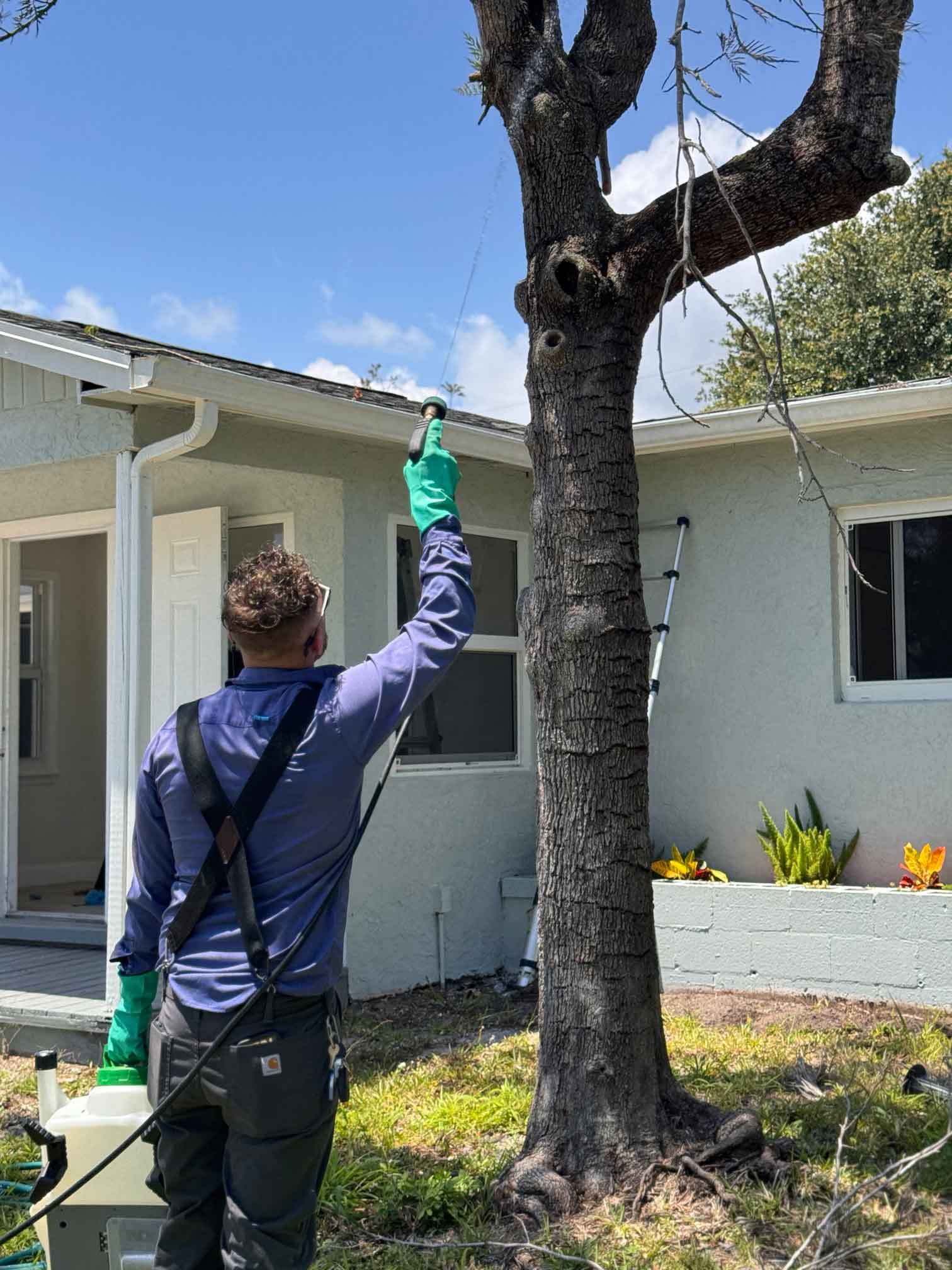
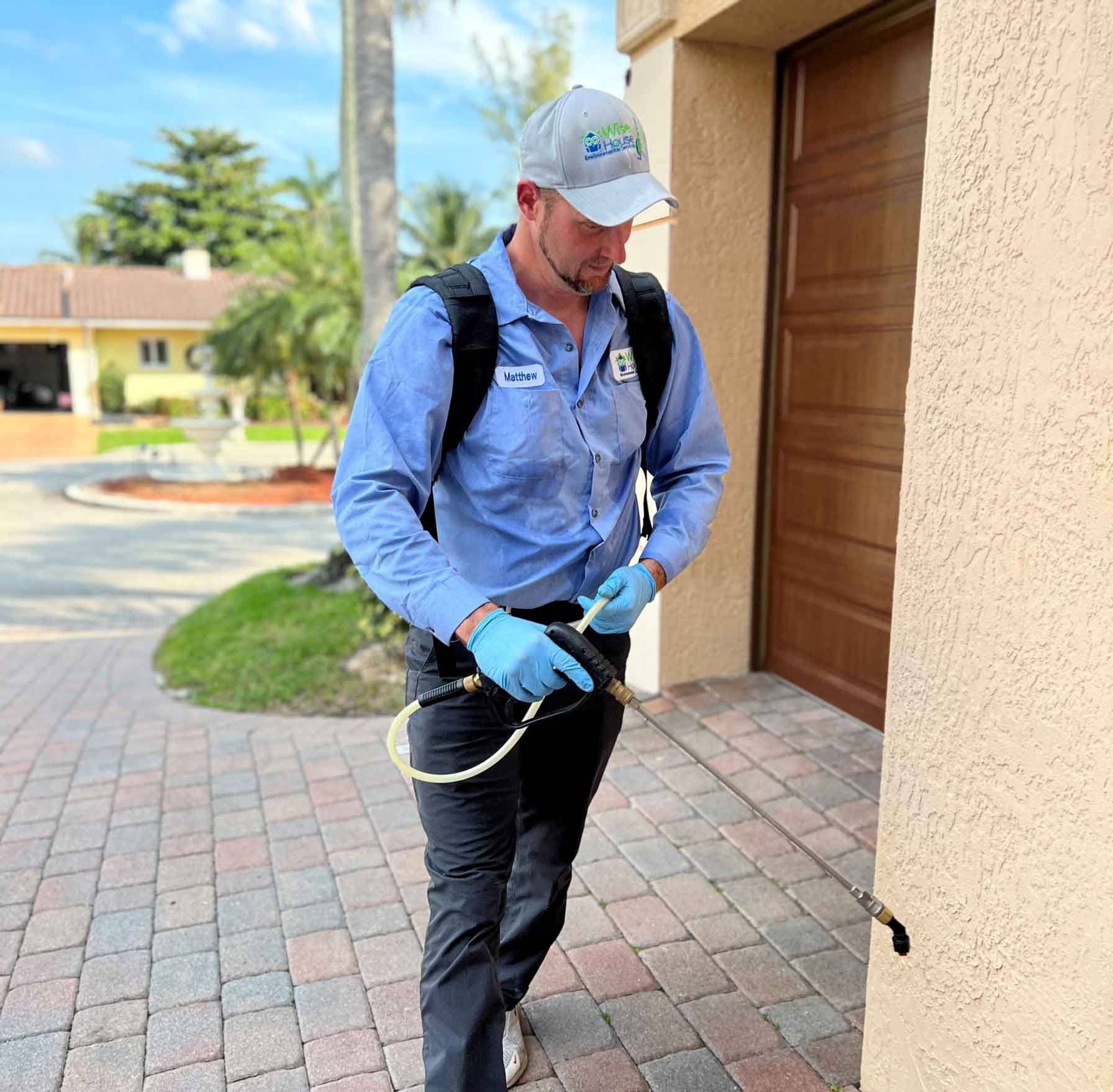
- Inspection of mailboxes, patio furniture, railings, and other hidden spots
- Physical removal of webs and spiky egg sacs
- Targeted treatment where spiders hide, safe for families and pets
- Regular follow-up visits, because new spiders keep arriving
Learn more about our residential pest control for homes in Boca Raton, Boynton Beach, and Port St. Lucie.
Need help getting rid of brown widows?
Contact Wise House Pest Control at (561) 727-8239 in Palm Beach County or (772) 783-4300 on the Treasure Coast for more information and a free quote on spider control services.
6 ways to keep brown widows away from your home
Brown widows hide in places you reach into every day. These habits help keep them away.
Check the hidden undersides
Look under patio furniture and railings, and inside mailboxes and trash can grips, before you reach in.
Remove webs and egg sacs
Vacuum or scrape away webs and spiky egg sacs as soon as you see them. Wear gloves and seal the debris in a bag outside.
Clear out clutter
Get rid of empty buckets, unused pots, old toys, and debris piles around the house and garage.
Bag and shake out stored items
Keep gloves, shoes, and outdoor gear in sealed bins, and shake out anything that has been sitting on the patio.
Rethink outdoor lighting
Lights near doors attract the insects brown widows eat. Point fixtures away from the house and turn off lights you don’t need.
Stay on a regular service schedule
New spiders keep drifting in, so one-time treatments rarely last. Our maintenance plans keep your home protected all year.
Our Customers Love Us!
See What They Are Saying
- Michael C.
- John U
- Benjamin N.
- Bob G.
- Aaron C.

Dedicated To Being The Pest Control Company You Can Rely On
Request a professional estimate!
★★★★★ 5.0 from 622 Google reviews
"My house was over run by ants and thankfully Zach spent hours working in the heat to help us out. Such a nice guy, I am so appreciative."
Taylor, ant extermination
"If you ever have an issue they will show up either same day or by the following. I've had great pest control over the years since I've used this company, specifically the ants, and they have been almost 99% controlled."
Raina T., general inspection and ant extermination
"Took extra time to make sure all of the spider webs were cleared from the pool cage. A+ service."
Christopher L., general pest inspection
"Luke arrived on time. He did an inspection then provided treatment to areas of concern. Thank you again for protecting our property from pests."
Christine, general pest control
Wise House News Flash
Learn Tips and Tricks to Keep Your Family and Pets Safer
Have Questions? We've Got Answers
Spider Control Services FAQ