Florida hybrid termites

A confirmed new development — and one that matters if you own a home in South Florida.

Pest Stats

Owl logo

Parent species

Formosan subterranean termite (Coptotermes formosanus) and Asian subterranean termite (Coptotermes gestroi)

Owl logo

First identified in lab

2015, University of Florida/IFAS

Owl logo

First confirmed in the wild

2021, South Florida

Owl logo

Location:

Southeast Florida - the only place on Earth where both parent species share the same territory

Owl logo

Flight season:

Spring - overlapping with both parent species' swarming periods

What are Florida hybrid termites?

Florida hybrid termites are the offspring of two invasive species – the Formosan and Asian subterranean termite – which are now interbreeding in the wild in South Florida. A 2025 UF/IFAS study confirmed that hybrid colonies are actively reproducing in the field, not just in a lab setting.
Researchers detected hybrid winged termites every spring from 2021 through 2025, confirming an established, reproducing population. South Florida is the only place on Earth where these two species occupy the same territory, which is what has made hybridization possible here and nowhere else.

How did this happen?

Both species arrived in Florida through global trade and boat traffic over the past century. For decades they were considered geographically isolated - Formosan termites tolerate temperate climates while Asian termites require tropical conditions. South Florida is warm enough for both. About ten years ago, UF/IFAS entomologist Thomas Chouvenc first observed males and females from both species interacting during spring swarming flights. In 2015, lab research confirmed they could produce hybrid offspring - and that those colonies were larger and faster-growing than either parent species alone. Finding hybrid colonies in the wild took years. In 2021, researchers finally identified the first wild hybrid swarmers. Genetic analysis confirmed they carried half the genes of each parent species.

Should South Florida homeowners be concerned?

Yes, though with important context. Researchers describe these hybrids as destructive, not as a science fiction super termite. Even so, lab studies showed hybrid colonies grow larger and faster than either parent species, which is a significant concern in a residential setting.
The bigger issue is what hybrids may inherit from the Formosan parent. Asian termites have historically been limited to Southeast Florida due to climate. Formosan termites can survive in much more temperate conditions and have spread across the southeastern United States. If hybrids inherit that climate tolerance, their potential range expands considerably.

Workers among brood
Image by Teechippy, via Wikimedia Commons, licensed under CC BY-SA 4.0.

Primary Reproductive with workers
Image by Teechippy, via Wikimedia Commons, licensed under CC BY-SA 4.0.

How to identify hybrid termites

Hybrid termites cannot be reliably identified by visual inspection – they require genetic analysis. In the field, they appear as winged swarmers during spring and may show characteristics of both parent species.
They tend to swarm during the overlapping window between Asian termite season (February to April) and Formosan termite season (April onward). If you are seeing large numbers of winged termites around lights in late winter or spring, contact a professional rather than attempting to identify the species yourself.

Signs of subterranean termite activity to watch for

Whether the species is Formosan, Asian, or a hybrid, the signs look similar:

Advanced infestations leave behind hollowed wood and, in severe cases, a papery material called carton – nest material packed into hollowed-out wood or structural voids.

Orange neotenic reproductive at top right
Image by Teechippy, via Wikimedia Commons, licensed under CC BY-SA 4.0.

What treatment is used for hybrid termites?

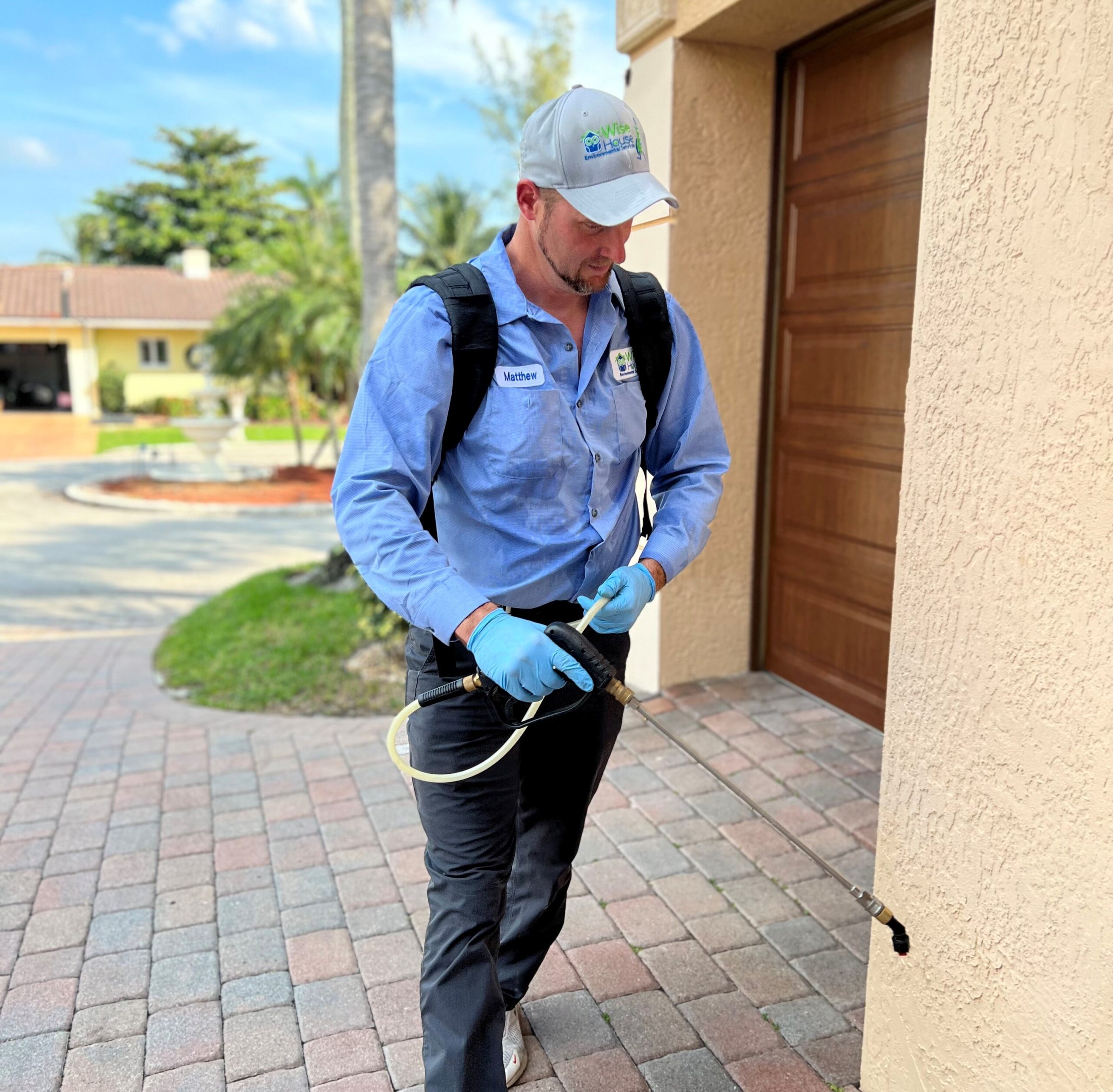
Treatment follows the same approach as for both parent species – targeting colonies in the soil and around the foundation:

UF/IFAS researchers recommend that homeowners in known overlap zones – Palm Beach, Broward, Miami-Dade, and the Treasure Coast – maintain ongoing termite monitoring given the active presence of multiple destructive species in the area.

Sources

Chouvenc T. et al. (2025). Proceedings of the Royal Society B UF/IFAS Fort Lauderdale Research and Education Center

Need termite control in South Florida?

If you suspect hybrid termite activity - or any termite activity - Wise House Pest Control provides professional inspections, targeted treatments, and long-term monitoring to keep your home protected.

5 ways to protect your home from hybrid termites

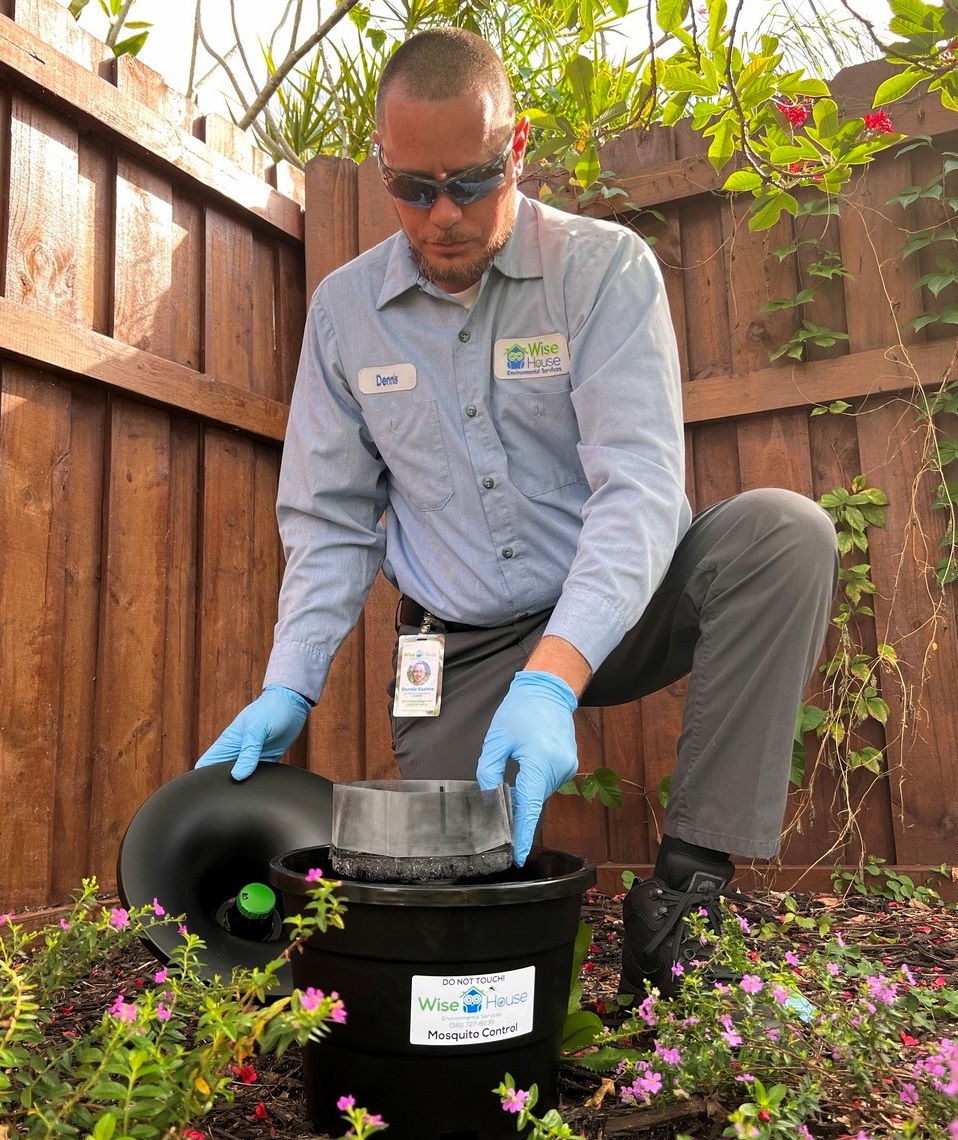
Install bait stations around your perimeter

Ongoing monitoring is the most reliable long-term protection against subterranean termite pressure.

Schedule annual inspections

Early detection matters more than ever with multiple species present in South Florida.

Eliminate soil-to-wood contact

Raise wooden structures away from direct ground contact.

Manage moisture around the foundation

Fix leaks, clear gutters, and ensure proper drainage.

Be cautious with boats and wooden items from tropical regions

Shipboard infestations are a documented pathway for termite spread.

Our Customers Love Us!

See What They Are Saying

Wise House reviews - 5-star pest control testimonial
“Wise House came highly recommended and they lived up to the accolades. Customer service, professionalisms, punctuality and the use of environmentally friendly products are on point. Dennis and Robert did an amazing job.”


- Michael C.
"Robert the technician that comes out has been great. Since we have a dog and two cats, we like that the products are pet safe. Very pleased!”

- John U
“Dennis was very professional and knowledgeable! I am very happy with Wise House and will now only use them for my pest protection! Five stars all around for Wise House Environmental Services.”

- Benjamin N.
“Robert is an extremely professional and knowledgeable technician. Did a great job inside with the active pests and awesome prevention as well as the outside. Highly recommend this company and especially Robert as the technician!”

- Bob G.
“He surveyed the entire property and used products that I felt would be safe and effective at getting rid of ants and other insects. I would definitely recommend Wise House, especially if you want effective pest control without all the toxins associated wit”

- Aaron C.
Bug-Logo

Dedicated To Being The Pest Control Company You Can Rely On

Request a professional estimate!
“The best technician I have had in years, professional, on time, friendly, very thorough and knowledgeable. I recommend him and the company to the future clients.”
Bozena S.
Flashlight Inspection Pic
ant control services technician treating home
Bug-Logo

Dedicated To Being the Pest Control Company You Can Rely On

Request a professional estimate!
ant control services technician treating home

Have Questions? We've Got Answers

Termite Control FAQ

Lab studies show hybrid colonies grow larger and faster than either parent species, which is a significant concern for homeowners. Whether that translates directly to faster structural damage in the field is still being studied.
Hybrid termite swarmers have been confirmed in Southeast Florida, in the overlap zone where Formosan and Asian subterranean termites share the same territory. This includes Palm Beach, Broward, and Miami-Dade counties.
You cannot tell by looking — hybrid termites require genetic analysis to confirm. If you are seeing swarmers or signs of subterranean termite activity in spring, schedule a professional inspection rather than attempting to identify the species yourself.
Researchers are concerned that hybrids may inherit the Formosan parent’s ability to survive in more temperate climates, which would expand their potential range beyond Southeast Florida. This is one of the key questions currently being studied.
They swarm in spring, during the overlapping window between Asian termite season (February to April) and Formosan termite season (April onward). Large numbers of winged termites around lights during this period warrant a professional inspection.
The same approach used for Formosan and Asian subterranean termites applies — bait stations around the perimeter and liquid trench treatments around the foundation. Annual inspections are strongly recommended for all South Florida homeowners.