
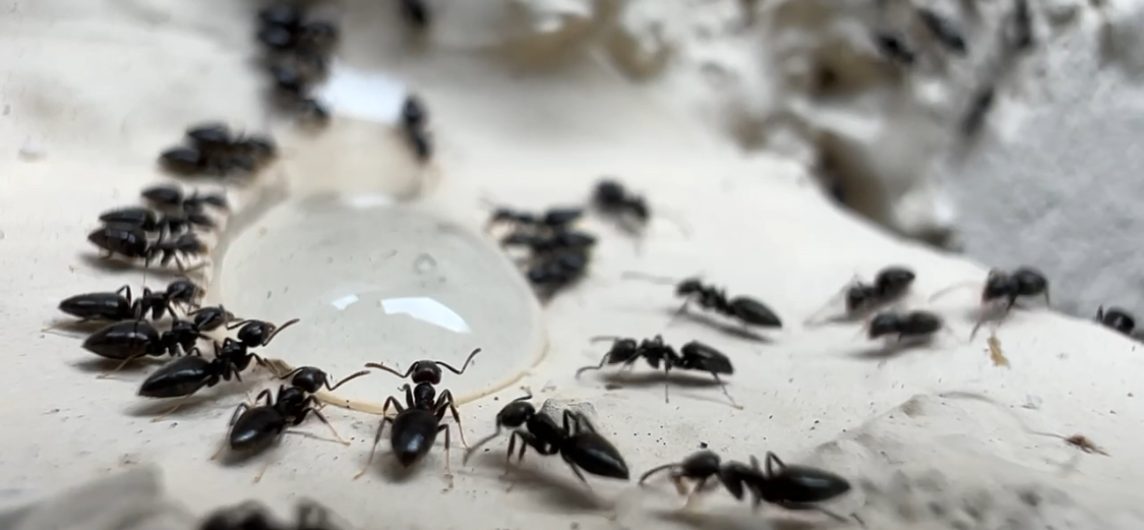
Let’s talk about something every homeowner in Florida has dealt with – you wake up in the morning, stumble into the kitchen for coffee, and boom, there’s a trail of ants across your counter like they own the place. From Boca Raton to Stuart, this is the Florida homeowner’s struggle.
Simple. Food, moisture, and warmth. South Florida kitchens are a paradise for ants. Crumbs under the toaster, a sticky splash of juice behind the fridge, or even a pet bowl in the corner can attract an entire colony. The most common offenders? Sugar ants, ghost ants, and big-headed ants. These tiny invaders are great at hiding, and even better at finding your snacks.
Ants are incredibly persistent, especially in homes near the water or homes with lots of potted plants inside or outside. A homeowner in Jupiter once told us they thought they had it under control until they moved a flower vase and found hundreds of ants nesting inside the foam at the base.
In Palm Beach County, Martin County, and Port St Lucie, ant issues spike during spring and summer. The mix of rain and heat drives them indoors. Starting early with the right strategy can prevent a small problem from turning into a full-blown infestation.
If you want your kitchen back, you’ve got to think like the colony. That means going for the queen, not just the trail.