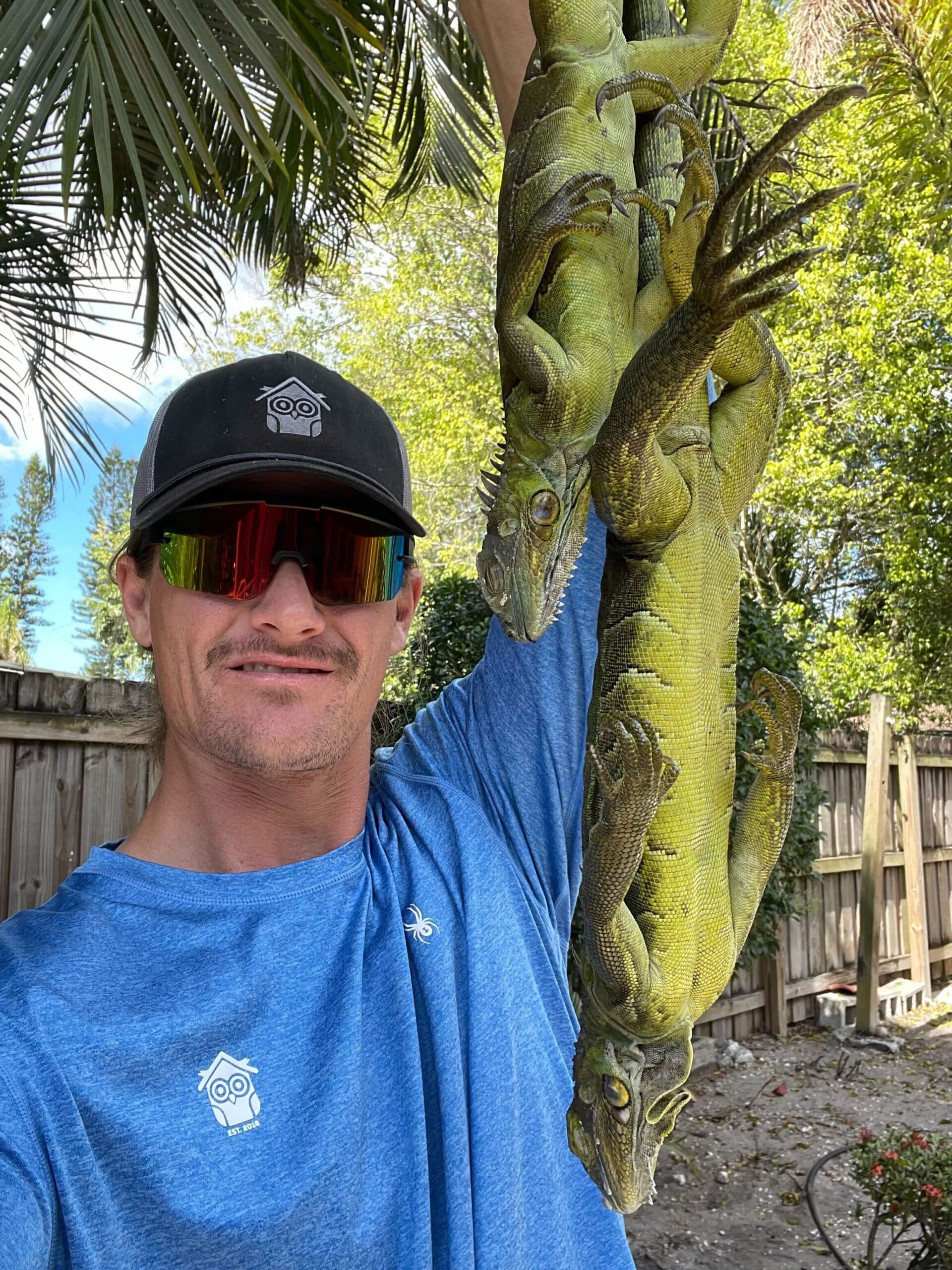

If you’re a Florida resident, you’ve probably seen the quirky headlines: “Falling Iguanas Alert!” It sounds like something out of a bizarre weather report, but it’s absolutely real. When temperatures drop below 50°F, these tropical reptiles go into a state that looks alarmingly like they’ve frozen solid. But before you start planning a lizard funeral, let me tell you what’s really happening, and what you should do about it.
Picture this: It’s a chilly Florida morning, and you’re sipping your coffee when – thud – an iguana drops from a tree onto your patio. Don’t panic! That iguana isn’t dead; it’s experiencing something called cold stunning.
Iguanas are ectothermic, meaning they can’t regulate their own body temperature. When the mercury dips into the 40s and 50s, their metabolisms slow dramatically. Their muscles become too stiff to grip branches, and down they tumble. They look frozen, but they’re actually in a state of suspended animation, conserving energy until temperatures rise.
Think of it like nature’s emergency shutdown mode – an evolutionary response to unexpected cold snaps.
“How do I make these mosquitoes stop ruining my life without bathing my family in chemicals?”
Here’s where things get interesting. According to recent reports from WPBF, the Florida Fish and Wildlife Conservation Commission has issued executive orders during extreme cold events that allow residents to collect cold-stunned iguanas without a permit and drop them off at designated FWC locations.
This is a significant shift. Instead of leaving iguanas to recover, the state is mobilizing communities to help manage this invasive species during its most vulnerable moments. Why? Because green iguanas are wreaking havoc on Florida’s environment and economy, and cold weather is one of the few natural controls on their exploding population.
During recent cold snaps, South Florida residents have been encountering cold-stunned iguanas everywhere – in Port St. Lucie, people have reported finding them in their yards alongside frozen water fountains, according to local weather reports. Some well-intentioned folks move them into sunny spots to warm up faster, but this is risky. As the iguana warms and regains consciousness, it can become defensive and may bite or whip its tail. Iguana bites are no joke – they have incredibly strong jaws and serrated teeth.
Others have started taking advantage of the FWC’s collection program, safely gathering cold-stunned iguanas and dropping them off at official locations. This is becoming the preferred approach because it directly helps reduce the invasive population.
Here’s something crucial: Green iguanas are an invasive species in Florida. According to the Florida Fish and Wildlife Conservation Commission, “Green iguanas are an invasive species in Florida and have adverse impacts on the state’s environment and economy.” They cause significant damage by eating native plants, burrowing under infrastructure (damaging seawalls, sidewalks, and foundations), and competing with native wildlife. The economic impact includes damage to residential landscaping, agricultural crops, and public infrastructure – costs that hit communities like Port St. Lucie particularly hard.
The FWC actually encourages homeowners to humanely euthanize iguanas on their property year-round. So while it’s natural to feel compassion for a seemingly helpless creature, helping an invasive iguana recover means it will continue to damage Florida’s ecosystems.
Sites typically operate 8 a.m. to 4 p.m. during cold events. Check the FWC website for current collection dates.

Despite their clumsy appearance on land, iguanas are excellent swimmers. They can hold their breath for up to 30 minutes and often escape predators by diving into water. In Florida, they've adapted to living near canals and waterways, using this skill to their advantage.

An adult iguana's tail can be as long as its body, and they use it as a whip when threatened. The force can break human skin and leave painful bruises. Even more amazing? If they lose their tail to a predator, they can regenerate it, though the new tail won't be quite as long or colorful as the original.

On top of their heads, iguanas have a pale scale called the parietal eye. It's not an eye in the traditional sense, but it detects light and movement from above, helping them sense predators like hawks. Think of it as their personal predator-detecting radar.

In captivity, well-cared-for iguanas can live 15-20 years. In the wild, predators and environmental challenges usually shorten their lifespan to around 8 years. This longevity is part of why their population in Florida has exploded—they have plenty of time to reproduce.

Iguanas are herbivores with specific nutritional needs. In Florida, they feast on ornamental plants, hibiscus flowers, orchids, and fruit trees—which is exactly why homeowners aren't too fond of them. A single iguana can decimate a garden in days, eating over a pound of vegetation daily.
Here's an uncomfortable truth: those cold snaps that stun iguanas actually serve an important ecological function. Prolonged freezing temperatures are one of the few natural controls on Florida's invasive iguana population. While individual iguanas may survive a brief cold stunning, extended freezes can reduce their numbers significantly. Scientists have observed that after particularly harsh winters, iguana populations decrease noticeably. The cold eliminates the weakest individuals and slows reproduction rates. It's nature's way of keeping an invasive species in check when humans have struggled to do so.
Safely collect cold-stunned iguanas and drop them off at designated locations. This directly helps reduce the invasive population.
You can humanely euthanize iguanas or contact a nuisance wildlife trapper—this is the ecologically responsible choice.
Report to animal control or the FWC. During cold events, check if collection sites are active for drop-off.
Move them safely to a shaded area, or better yet, collect them for FWC drop-off if collection sites are active.
Want to participate in FWC iguana collection efforts? Check FWC’s website and social media, follow local news for extreme cold warnings, or sign up for FWC email alerts. Collection sites are typically announced when temperatures are forecast to drop below 45°F – rare events that present real opportunities to protect Florida’s ecosystems.
Cold-stunned iguanas are a uniquely Florida phenomenon. But Florida is getting smarter about managing this invasive species—turning cold weather events into conservation opportunities through organized collection efforts.Whether you participate in FWC collections, manage iguanas on your property, or simply stay informed, the key is understanding the ecological context and making informed decisions. And maybe check those tree branches on cold mornings – you never know when it might be raining lizards!Have you encountered a cold-stunned iguana in Port St. Lucie or elsewhere in Florida? Share your stories in the comments below!
Separate them immediately. Iguanas can bite/scratch when they recover. If your pet is injured, call your veterinarian.