
Blog Post

Frozen Iguanas in Boynton Beach, Lantana & West Palm Beach: What Palm Beach County Residents Need to Know

If you woke up this morning in Boynton Beach, Lantana, or West Palm Beach to find what looks like a dead iguana on your lawn, don’t panic—and don’t reach for it just yet. Those “frozen” lizards scattered across Palm Beach County aren’t deceased; they’re cold-stunned, and they’re about to teach you a valuable lesson about Florida’s invasive species problem.

What's Happening Across Palm Beach County?

Recent cold snaps have turned Palm Beach County into ground zero for falling iguanas. From West Boynton Beach to Lantana, residents are finding these large reptiles seemingly frozen solid on sidewalks, in pools, and scattered across their yards. According to recent reports, people across our communities have been rounding up cold-stunned iguanas by the dozens.
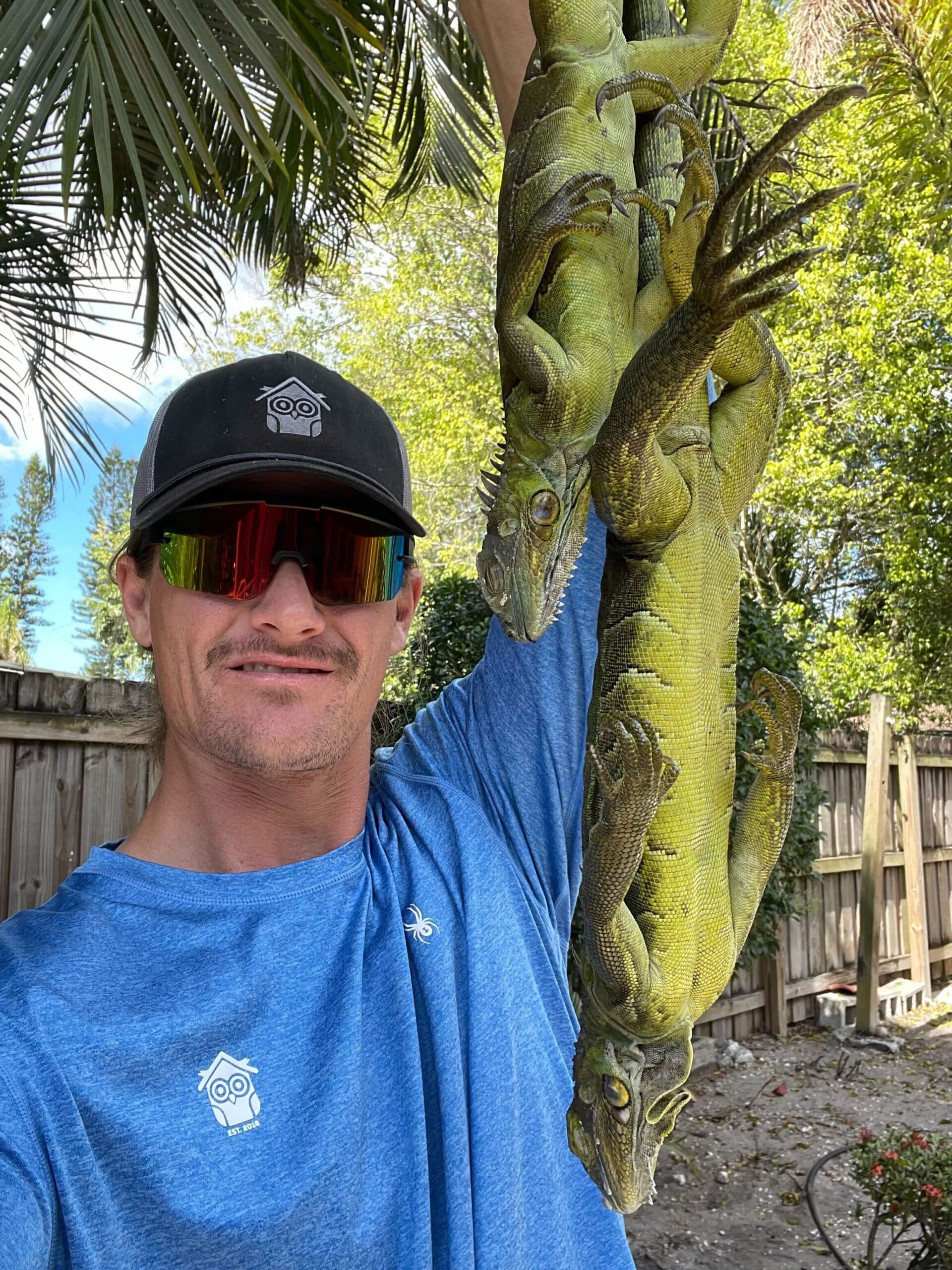
Here’s what’s actually happening: When temperatures drop below 50°F, these tropical reptiles can’t regulate their body temperature. Their muscles stiffen, they lose their grip on tree branches, and down they fall. It looks dramatic (and a bit concerning), but it’s a temporary state called cold stunning.

Green iguana safely removed from tree by pest control technician in Florida

“How do I make these mosquitoes stop ruining my life without bathing my family in chemicals?”

The Real Problem: Why This Matters for Boynton Beach & Beyond

While it might be tempting to feel sorry for these seemingly helpless creatures, here’s the hard truth Palm Beach County residents need to understand: Green iguanas are wreaking havoc on our communities. 

The Boynton Beach Police Department Generator Incident

Remember when 10 iguanas decided to make a home inside the Boynton Beach Police Department’s generator? It cost the city nearly $10,000 to clean out almost 2 inches of iguana feces, replace damaged components, and seal the equipment. City officials were genuinely concerned about the risk of iguanas being “ejected through the radiator cooling fans” if the generator turned on while they were inside.


That’s not just an inconvenience – that’s a serious public safety and infrastructure issue.

West Palm Beach's $1.8 Million Dam Disaster

In West Palm Beach, iguana burrowing contributed to approximately $1.8 million in damage when their digging undermined a dam controlling water flow into the city’s reservoirs. These aren’t just garden pests – they’re causing catastrophic infrastructure failures that taxpayers are footing the bill for.

Lake Worth Beach Pool Shutdown

In Lake Worth Beach, iguanas literally shut down a high school pool when their feces overwhelmed the aging filtration system. They’ve also been responsible for multiple power outages throughout the city.

What This Means for Your Property

If you live in Boynton Beach, Lantana, West Palm Beach, or anywhere in Palm Beach County, iguanas are likely causing damage you haven’t even noticed yet:
Owl logo

Burrowing under seawalls, sidewalks, and foundations -

This is especially problematic in our waterfront communities

Owl logo

Destroying landscaping -

They devour hibiscus, orchids, vegetables, and ornamental plants

Owl logo

Weakening canal banks -

A major concern near the Intracoastal and throughout our canal systems

Owl logo

Contaminating pools and patios -

Iguana droppings carry salmonella

Owl logo

Carrying ticks and disease -

Particularly concerning for families with pets

Florida's New Approach: The FWC Collection Program

Here’s the good news for Palm Beach County residents: Florida Fish and Wildlife Conservation Commission has recognized that cold weather events present a unique opportunity to manage this invasive species crisis. During recent cold snaps, the FWC issued executive orders allowing temporary removal of cold-stunned iguanas without a permit. According to reports, over 600 iguanas were dropped off in just one Sunday, with hundreds more on Monday – including 140 collected by the Palm Beach County Parks and Recreation team alone. 

Official FWC Drop-Off Location Nearest to Our Area:

During cold events, this location typically operates from 8 a.m. to 4 p.m. Check the FWC website for current collection dates.

What Should Boynton Beach, Lantana & West Palm Beach Residents Do?

If You Find a Cold-Stunned Iguana:

Option 1 – During FWC Collection Periods (RECOMMENDED):
Safely collect the iguana and take it to the Tequesta drop-off location. You’re directly helping protect our local ecosystem and infrastructure.

Safety tips for collection:

Option 2 – Year-Round on Your Property:
Property owners can humanely euthanize iguanas or contact licensed nuisance wildlife trappers. This is legal and encouraged by the FWC.

Option 3 – Leave It Alone (Least Recommended):
The iguana will warm up and continue damaging our community’s infrastructure, landscaping, and ecosystem.

5 Things Palm Beach County Residents Should Know About Iguanas

Owl logo

They're Recently Added to Florida's "Everglades Dirty Dozen" List

Green iguanas were just added to Florida's list of the 12 most destructive invasive species, alongside Burmese pythons and other environmental threats. They made the list because of their widespread damage and rapid population growth.

Owl logo

They're Excellent Swimmers

Don't assume your waterfront property in Boynton Beach or canal-side home in Lantana is safe. Iguanas can hold their breath for up to 30 minutes and are strong swimmers. They actually prefer living near water, which is why our Intracoastal communities are hit especially hard.

Owl logo

That Tail Is a Serious Weapon

An adult iguana's tail can be as long as its body and packs enough force to break human skin and leave painful bruises. Even worse, they carry salmonella in their digestive tract and often have ticks on their bodies—particularly concerning for our equestrian communities in Wellington and surrounding areas.

Owl logo

They Reproduce at Alarming Rates

Female iguanas can lay between 14 to 76 eggs throughout the year. That's why you never see just one iguana—once they've claimed your property in West Palm Beach or Boynton Beach, the population explodes.v

Owl logo

The Town of Palm Beach Has a Budget Line Item for Them

For years, the Town of Palm Beach maintained a separate budget allocation specifically for iguana removal, ranging from $1,000 to $3,500 annually, mostly for their Par 3 Golf Course. That tells you everything you need to know about how serious this problem has become.

Why Cold Weather Is Actually Good News for Palm Beach County

Here's a silver lining: Those cold snaps that stun iguanas serve a crucial ecological function. Extended freezing temperatures are one of the few natural controls on our exploding iguana population. After particularly harsh winters, scientists observe noticeable decreases in iguana numbers. It's nature's way of keeping an invasive species in check when human efforts have struggled. The recent cold event that brought thousands of iguanas to FWC collection sites represents a real opportunity for our community to reduce the population and protect our infrastructure.

Stay Informed About Future Collection Events

Want to participate when the next cold snap hits Palm Beach County?
How to stay updated:

Follow the FWC website and social media channels

Watch local news (they typically announce collection opportunities during extreme cold warnings)

Sign up for FWC email alerts about invasive species management

Follow Palm Beach County Parks and Recreation social media

Collection events typically happen when temperatures are forecast to drop below 45°F – not often in South Florida, but when it happens, it’s our chance to make a real impact.

The Bottom Line for Palm Beach County Residents

Cold-stunned iguanas might look pitiful, but remember: these invasive reptiles are costing Boynton Beach, West Palm Beach, and communities throughout Palm Beach County millions in infrastructure damage, destroying our native ecosystems, and posing health risks to our families and pets.
Whether you’re in Lantana watching them fall from palm trees, in West Boynton Beach dealing with burrowed seawalls, or in West Palm Beach concerned about your property’s foundation, you have options—and during cold events, you have the perfect opportunity to help.
The next time you see a frozen iguana in your yard, remember: you’re not just looking at a cold lizard. You’re looking at an invasive species that’s actively damaging the community we all call home.
Have you experienced iguana damage in Boynton Beach, Lantana, or West Palm Beach? Share your stories in the comments below – we’d love to hear from our local community!

Wise House Pest Control provides safer, more effective pest control solutions for Boynton Beach, Lantana, West Palm Beach, and all of Palm Beach County. While we specialize in insects and rodents, we can connect you with licensed wildlife removal professionals for iguana issues. For year-round pest protection that actually works, call us at (561) 727-8239 or visit wisehousebugs.com

Have Questions? We've Got Answers

Frequently Asked Questions

When temperatures drop (often around the 40s°F), iguanas can become cold-stunned. They lose their grip, go still, and may drop from trees.
Not always. Many are alive but immobilized and can “wake up” quickly once they warm up.
Use caution. Even cold-stunned iguanas can suddenly regain movement. They can scratch, bite, or tail-whip if they recover while you’re handling them.
If it’s not in a dangerous spot, the safest option is often to leave it alone and keep pets/kids away. If it’s in a walkway or road, move it only if you can do so safely.
Generally, no. Bringing an invasive reptile indoors can be risky (escape, injury, salmonella exposure, etc.). If you’re unsure, contact a professional.
No — relocating and releasing captured green iguanas elsewhere is not allowed. If you capture one, use approved options (professional help or official guidance).

Separate them immediately. Iguanas can bite/scratch when they recover. If your pet is injured, call your veterinarian.

They can cause a short-term drop in activity and some die-off, but green iguanas rebound quickly because they reproduce efficiently in warm climates.
They seek shelter in dense vegetation, burrows, seawalls, attics/structures, and other protected microclimates to retain heat.
Call when iguanas are: damaging landscaping/seawalls entering attics/structures creating repeated mess/sanitation issues too large/aggressive to handle safely
[DISPLAY_ULTIMATE_PLUS]